Organic Fabric Archives - Square Corporation
textile mills in punjab square textile company square manufacturing company textile manufacturer

Rib Knit vs Jersey Knit: Choosing the Right Fabric Structure

A small difference in fabric structure can change how a garment fits, feels, and performs. A T-shirt needs a soft feel and a smooth finish, while a sleeve cuff must stretch and return to its original shape. This is why organic cotton producers must look beyond colour and fibre content when choosing fabrics. Rib knit and jersey knit are two popular options, but each serves a different purpose.

In this blog, we will highlight their key differences and help you choose the right knit fabric for your products.

What is the Difference between Rib Knit and Jersey Knit?

Both Rib Knit and Jersey Knit fabrics use interlocking yarn loops. However, their knitting structures create different textures, stretch levels, and uses. Let’s explore the most common yet significant differences between Rib Knit and Jersey Knit fabrics.

1. What is Rib Knit Fabric?

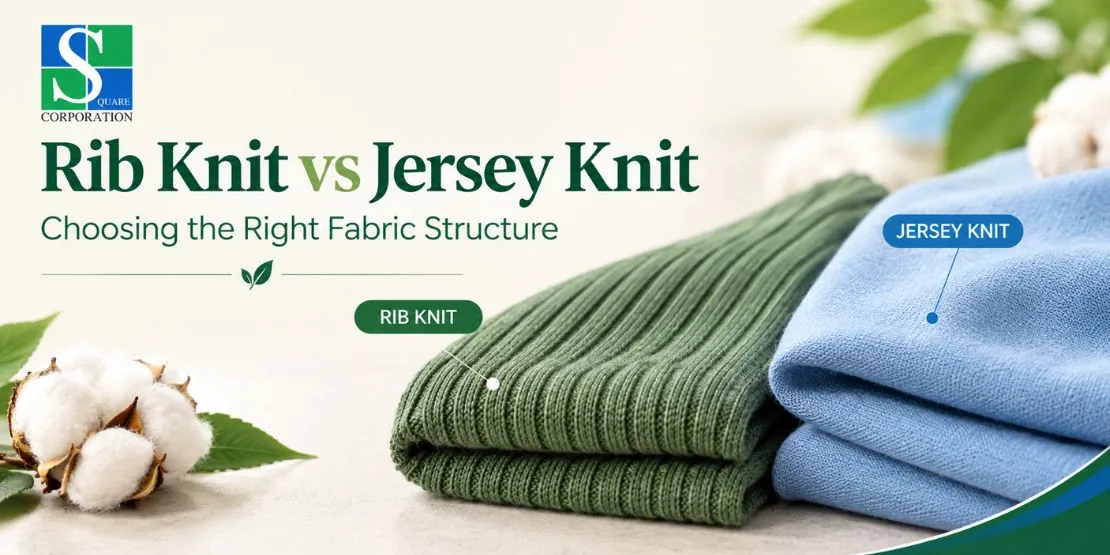
Rib knit fabric features raised vertical lines that give it a textured appearance. Its structure lets it stretch across the width and return to its original shape when the fibre blend and quality support good recovery.

Manufacturers often use rib knit for garments that need a close fit or flexible edges. It also adds texture to simple clothing designs. The common uses of Rib Knit fabrics include:

  • Cuffs, collars, and waistbands
  • Fitted tops and dresses
  • Neckbands and other garment trims

2. What is Jersey Knit Fabric?

Jersey knit has a smooth front and a slightly textured back. Manufacturers often choose it for its soft feel, comfortable fit, and natural drape. Cotton jersey works well for everyday clothing, while blended versions can offer different levels of stretch and durability.

Jersey knit is a popular choice for:

  • T-shirts and casual tops
  • Dresses and lightweight clothing
  • Comfortable everyday wear

Rib Knit vs Jersey Knit: Key Differences

Understanding how these fabrics perform can help you select the right material for your product range. Below are some key differences between Rib Knit and Jersey Knit fabrics.

Texture and Appearance

The first notable difference that makes the two fabrics different is their texture and appearance. Rib knit features visible vertical ridges on both sides. This texture adds depth to a garment and works well for fitted designs.

Jersey knit offers a smoother surface and a clean finish. It suits simple designs, printed T-shirts, and garments that need a soft drape.

Stretch and Shape Retention

Rib knit usually offers greater crosswise stretch than standard single jersey. It can fit closely around the body and work well in areas that need flexibility.

Jersey knit offers moderate stretch, mainly across its width. Its performance depends on the yarn, fibre blend, and knitting method. Adding elastane can improve stretch and recovery.

Comfort and Fabric Weight

Both Rib Knit and Jersey Knit fabrics can feel soft and comfortable. However, their weight depends on yarn type, stitch density, and finishing.

Lightweight jersey works well for warm-weather clothing. Rib knit suits fitted garments and flexible trims. Hence, buyers should compare fabric samples before choosing a material for large-scale production.

How to Choose the Right Knit Fabric for Your Products

Your choice should match the purpose of the garment, its design, and the needs of your customers. You can choose rib knit when you need extra stretch, a close fit, or flexible garment edges.

You can choose jersey knit when you want a smooth surface, soft drape, and comfortable everyday wear. Don’t forget to compare fabric samples to check thickness, stretch, recovery, colour, and finish before placing a bulk order.

The Conclusion

In summary, both Rib knit and jersey knit each offer distinct benefits. Rib knit works well for fitted garments and flexible trims, while jersey knit suits T-shirts, casual clothing, and lightweight designs. The right choice depends on your product specifications, quality standards, and target market.

At Square Corporation, we offer a wide range of knitted fabrics, yarns, and textile solutions for apparel brands and manufacturers. With a focus on quality, invention, and responsible sourcing, we help businesses meet changing market needs. Contact Square Corp, a reputable textile supplier in Punjab, today to explore our textile solutions and find the right fabric for your next collection.
Fabric Sourcing: Quality & Consistency for Jeans Manufacturers

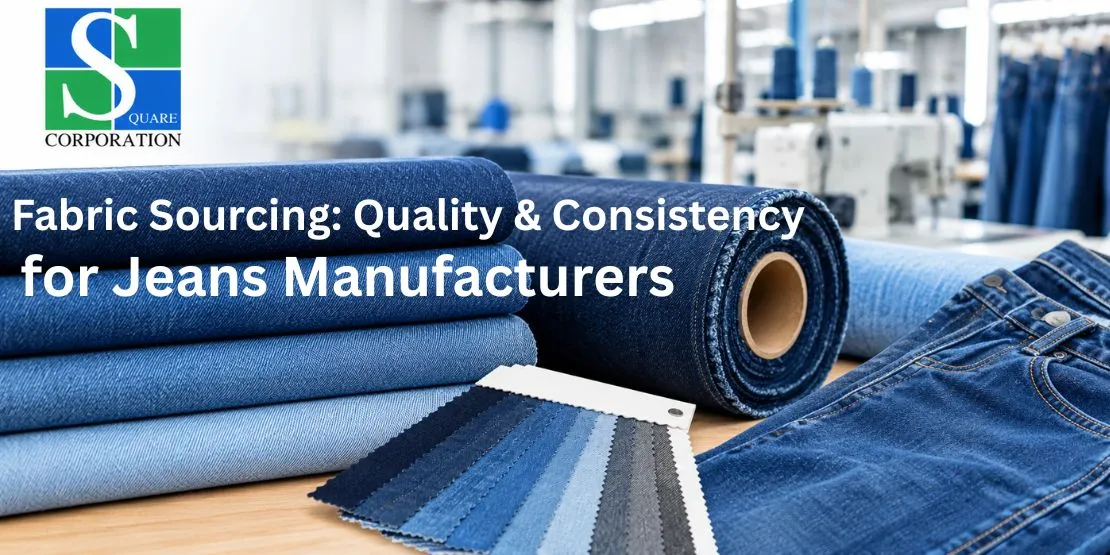
Denim has a legacy and attractive charm that you cannot deny. It can be rugged, yet it delivers comfortable, timeless style and fashionable trends through innovation. However, behind a great pair of jeans, consistent, quality denim fabric matters. For jeans manufacturers, fabric sourcing is much more than finding an attractive shade of indigo.

The right denim fabric must meet the garment’s design requirements and deliver great performance. That’s why thoughtful denim fabric sourcing from top sustainable fabric suppliers in India matters. Understanding key fabric quality, carefully evaluating suppliers, and analyzing fabric consistency before bulk production help keep the supply chain running smoothly.

Now let’s explore this blog to ascertain why denim fabric sourcing matters to maintain quality and consistency for jeans manufacturers.

Why Denim Fabric Sourcing Matters for Quality & Consistency

If jeans manufacturers want to know why denim fabric sourcing matters a lot for quality and consistency, this section can clarify the matter,

Start with the right denim fabric specification

Before requesting bulk quotations, manufacturers should discuss what they actually need. A clear specification helps jeans manufacturers choose the right fabric. Fabric weight influences the fabric’s feel, drape, and structure for different garments. Traditional denim is commonly made from cotton, while stretch denim may incorporate elastane or other fibers.

Look beyond appearance when evaluating denim quality

A beautiful denim sample can grab a manufacturer’s attention; however, appearance alone isn’t enough to make a denim fabric suitable for commercial production. For stretch denim, evaluate how well the fabric returns to its original dimensions after being extended. Assess tensile strength, tear resistance, and abrasion performance based on the garment’s intended use.

Why shrinkage testing is vital

A jeans manufacturer can develop a new slim-fit jean collection, but after washing, the finished jeans may shrink more than expected. In that case, the fit no longer matches the approved sample, creating major complications. That’s why shrinkage needs to be evaluated early.

Denim can change dimensionally during relaxation, garment washing, drying, and other finalizing processes. The extent of change depends on the fabric construction, fiber composition, and processing conditions.

Maintain color consistency in every production

Color is one of the most recognizable features of denim jeans. From deep indigo and washed blue to charcoal, black, and vintage-inspired shades, the intended color drives denim production. Differences in dyeing conditions, finishing, fabric lots, and washing treatment can create visible variations in denim production.

Achieve batch-to-batch denim consistency

For reputed jeans brands, color consistency is more important than receiving top-notch fabric. The same jeans may need to be manufactured repeatedly over several months, and buyers expect it to retain its defining features. A reliable denim sourcing process mainly focuses on maintaining complete fabric specifications, including fabric composition, weight, color, and width.

Choose a denim fabric supplier based on more than price

Price is not always the most important factor when sourcing textiles. However, choosing a trusted denim supplier, or one of the biggest textile exporters in India, is a vital consideration alongside price.

A dependable supplier should be able to discuss the fabric’s intended use, provide samples, and clearly explain how it will manage quality concerns. For international buyers, proper communication, export documentation, shipping coordination, and packaging matter a lot.

Conclusion

Finding the right denim fabric is the most important step toward producing branded jeans that meet brand expectations. If you are searching for a reliable fabric for your jeans manufacturing business, Square Corporation can fulfill your requirements. Explore our portfolio online and contact our team to discuss your requirements.

Organic Fabric for Babywear: What Textile Manufacturers Should Consider

For textile businesses manufacturing babywear, fabric quality is a vital consideration. A tiny romper, a soft sleep suit, or a simple cotton bodysuit may look like an ordinary garment, but behind every piece lies a huge responsibility.

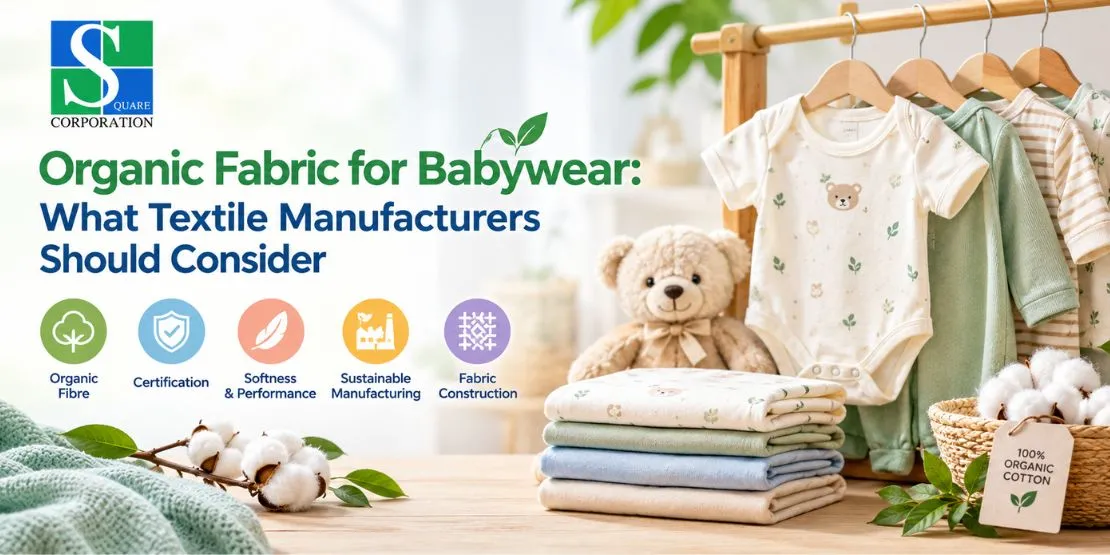
Babywear fabric should be comfortable and perform well after repeated washing. That’s why the biggest textile exporters in India pay close attention when choosing organic fabric for babywear. From selecting sustainable fibre to garment processing, certification, and fabric construction, each step deserves careful consideration. Babywear brands must focus on reliable sources of organic fabric that meet buyers’ expectations.

Let’s explore this blog to understand what textile manufacturers should consider when choosing organic fabric for babywear.

What Textile Manufacturers Should Consider for Babywear

A babywear manufacturing company must focus on a few essential aspects while choosing reliable organic fabric sourcing; let’s discuss it in detail.

Start with the right organic fibre

The foundation of premium-quality babywear mainly depends on the fibre. From the perspective of many trusted and renowned babywear manufacturers, organic cotton is the most relevant option because of its natural feel. Through different yarn and fabric constructions, babywear is produced, and it intentionally supports garment quality.

Certification is more than a label

When you manufacture babywear for international markets, certification deserves serious attention. GOTS (Global Organic Textile Standard) is particularly relevant because it covers organic textile processing, not just the farming stage.

If a garment manufacturing business is developing an organic babywear collection for export, checking certification at the fabric-sourcing stage can help prevent compliance issues later.

Softness matters along with fabric performance

Babywear fabric should feel wonderfully soft when you first touch it. As babywear goes through frequent washing, drying and folding, considering a reliable and suitable fabric option is highly recommended.

Breathability, yarn quality, dimensional stability, colour fastness, and durability after repeated washing are key features of reliable, high-quality organic fabric. The goal isn’t just soft fabric; it’s fabric that stays comfortable and functional all day.

Think about the entire manufacturing journey

Focusing on organic farming while overlooking what happens afterwards is a serious mistake babywear manufacturers make. Once the cotton leaves the farm, it passes through several stages. Each stage influences the final textile and enhances the overall textile journey.

Babywear manufacturers should therefore ask cotton yarn traders and suppliers about the advanced processing practices, dyeing and finishing methods, chemical management, wastewater practices, certification coverage, and quality control process.

Do not ignore fabric construction

‘Organic fabric’ describes the fibre sourcing approach, but the final experience depends on fabric construction. For babywear manufacturing, knitted and woven fabrics offer different characteristics; that’s why babywear manufacturers should match fabric construction to the garment’s purpose rather than choosing organic fabric based only on its sustainability credentials.

Conclusion

The right material type can make a meaningful difference in manufacturing babywear. If you are a textile manufacturer looking for certified organic cotton, Square Corporation can help by providing suitable organic fabric sourcing. You can connect with us to discuss your organic textile sourcing requirements and create a vast range of reliable babywear collections.

Why Traceability Is Becoming Essential for Organic Fabric Sourcing in 2026

In 2026, textile buyers are becoming more conscious and are mainly focusing on sourcing organic fabric. A common question may arise in their minds: ‘Can a fabric supplier show where the fabric actually originates and whether the organic fabric claims are certified? This vital question raises the importance of traceability in organic fabric sourcing.

As textile businesses work with more complex global supply chains, buyers want greater visibility into raw materials, certifications, and manufacturing processes. For textile manufacturers and brands that mainly source organic cotton and sustainable fabrics, traceability is a reliable option.

For supplier evaluation and responsible textile sourcing, traceability is becoming an important part of textile sourcing. When choosing viscose yarn suppliers in India that work across organic cotton, yarn, and fabric supply in international markets, maintaining product visibility becomes more valuable.

In this blog, we will discuss why traceability is becoming essential for organic fabric sourcing in 2026.

What Does Traceability Mean in Organic Fabric Sourcing?

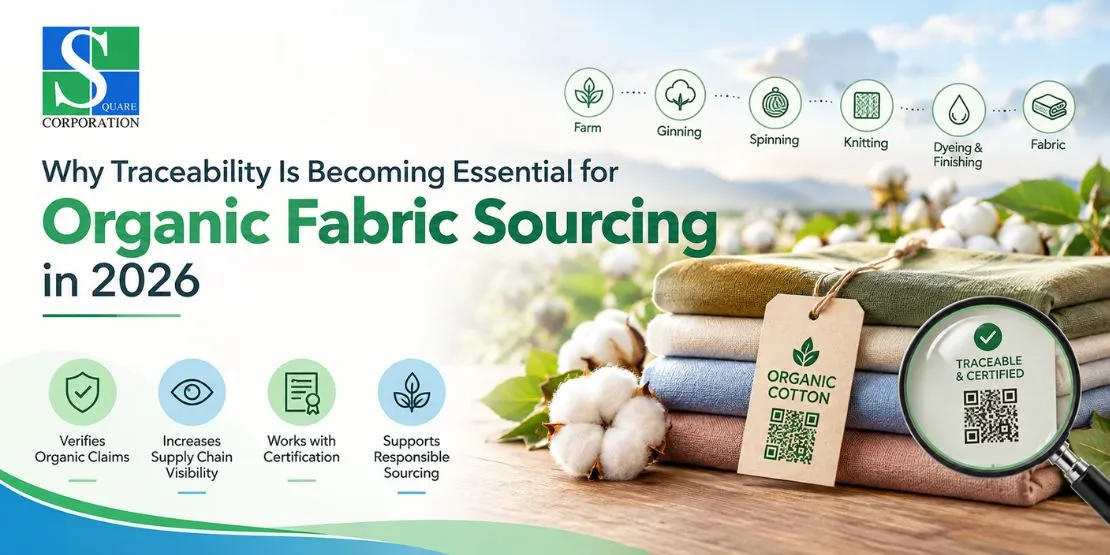
Organic fabric traceability means being able to follow a material through the different stages of its supply chain. It mainly starts at the farm, and from there the fabric moves through organic harvesting, ginning, processing, spinning, knitting, and dyeing before becoming fabric.

Fabric manufacturers need to maintain relevant records and certification documentation to support the authenticity of the fabrics. A simple tagline, ’ organic ’, is not enough to satisfy textile buyers until they get a documented form of organic fabric sourcing certification.

Importance of Traceability in Organic Fabric Sourcing in 2026

In this section, we will discuss the importance of traceability in organic fabric sourcing in 2026.

1. Traceability helps verify organic claims

When you plan to buy organic cotton fabric for a new apparel collection, the supplier may tell you it is organic, and the fabric looks great. However, how do you know the supplier’s claim is authentic? In such a case, traceability lets buyers look beyond the label and understand the material’s documented journey.

Certification processes such as GOTS can provide an additional layer of verification by covering relevant stages of the supply chain and using documentation such as scope certificates and transaction certificates.

2. It gives textile buyers greater supply chain visibility

A textile supply chain mainly involves multiple business stages. Without proper documentation, it can be difficult to understand where a particular raw material originated. Traceability helps create a clear picture of raw material origin, organic certification, processing stages, dyeing and finishing, and certification status. This visibility helps textile buyers get transparent information about the raw materials.

3. Certification and traceability work together

Certification and traceability are closely connected with each other. Certification demonstrates safety compliance with defined safety standards, while traceability tracks the movement and identifies materials across the supply chain.

4. Traceability supports responsible textile sourcing

A textile brand may want to reduce its environmental impact by using organic materials and build a responsible brand strategy. In such cases, traceability becomes valuable. Rather than simply saying’ sustainable fabric ’, reliable textile export companies in India can work closely with traceability and understand how the fabric was processed and how it fulfils the requirements of a strong supply chain.

Conclusion

Organic fabric has become an important material choice for making sustainable textile products. If you are in textile manufacturing and looking for organic fabric sources, you can choose Square Corporation. We offer organic cotton, yarn, and sustainable fabric solutions to support your brand immensely.