
September 2026 - Square Corporation
textile mills in punjab square textile company square manufacturing company textile manufacturer

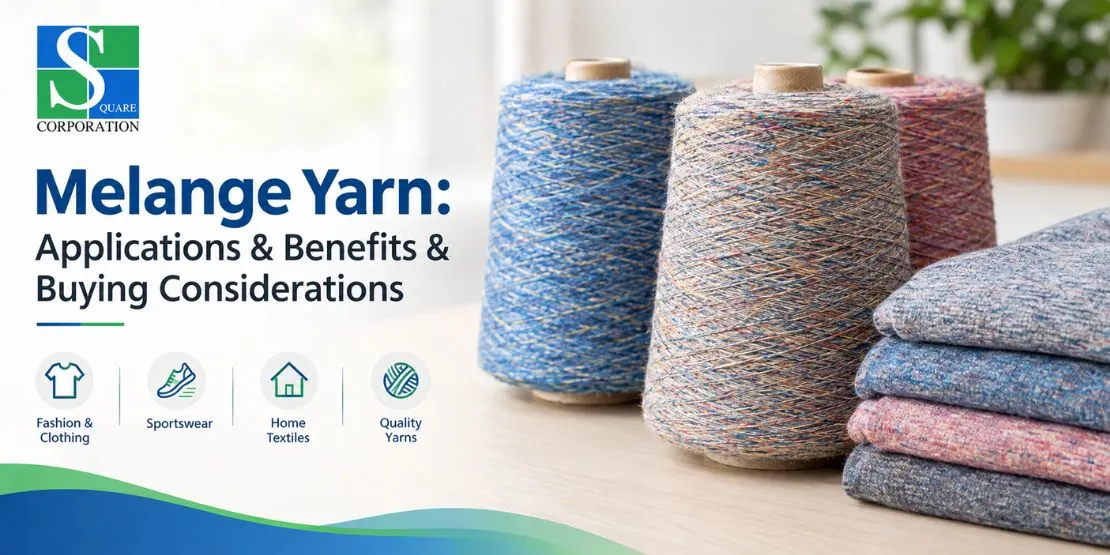
Melange Yarn: Applications & Benefits & Buying Considerations

Sometimes, a small change in color can make a fabric look completely different. This is where melange yarn makes a difference. It creates a soft mix of colors that gives fabric a unique, attractive look. Unlike regular yarn, it doesn’t always have a single, flat color. Instead, it can create a subtle blend of shades.

Melange yarn is now widely used in clothing and textile manufacturing. It works well for both style and comfort. For businesses looking at cotton yarn export from India, understanding different yarn types can help them choose the right product for their textile requirements. Choosing the appropriate yarn is key to achieving the desired fabric quality. In this blog, we will discuss the uses, benefits, and key buying considerations for melange yarn.

What is Melange Yarn?

Melange yarn is made by mixing fibers of different colors or types. These fibers are then spun together to create yarn with a blended color effect.

The final look can range from a light, soft blend to a stronger multi-color effect. The choice depends on the fiber type, color combination, and production process.

Square Corporation offers different types of melange yarn, including 100% cotton melange, organic/BCI melange, PC/CVC melange, space-dyed melange, Grindle/Siro melange and Lurex melange.

Most Prominent Applications of Melange Yarn

Melange yarn has many uses in the textile industry. Its unique look makes it suitable for different types of fabrics and products. The following are some prominent applications of melange yarn.

Clothing

Melange yarn is commonly used for T-shirts, tops, sweatshirts, hoodies, and casual clothing. It gives these products a modern, attractive look.

Sportswear

Many sportswear products need fabrics that look stylish and feel comfortable. Melange yarn can help create such fabrics.

Home Textiles

Manufacturers can also use melange yarn for selected home textile products. These include bedsheets, towels, and other fabric-based items.

Why Choose Melange Yarn: Key Benefits at a Glance

Melange yarn offers more than just a unique color effect. It can improve the overall look and feel of a fabric while giving manufacturers more choices. Below are some prominent advantages of melange yarn that everyone should know.

Creates a Rich and Attractive Look

The beautiful blend of colors gives fabric more depth and character. Even a simple garment can look stylish and modern with melange yarn.

Offers More Design Possibilities

Melange yarn is available in different fiber types, shades, and effects. This allows manufacturers to explore different fabric designs and create products that stand out.

Provides Softness and Comfort

Cotton-based melange yarn can create soft and comfortable fabrics. This makes it a practical choice for everyday clothing, especially garments worn close to the skin.

Fits Different Textile Requirements

Every textile product has different needs. Hence, manufacturers can choose the right yarn composition based on the desired fabric feel, appearance, performance, and end use.

What to Check Before Buying Melange Yarn?

Choosing yarn isn’t only about selecting the right color. A few other factors also matter.

Fiber Composition: Check whether you need cotton, organic cotton, or a blended yarn.

Yarn Count: Choose the count according to the fabric and product requirements.

Color Consistency: Check samples to make sure the shade meets your expectations.

End Use: Select yarn according to whether you plan to make clothing, sportswear, or other textile products.

Quality: Check important factors such as strength, appearance, and consistency.

Supplier: Work with a supplier that can provide reliable quality and timely support.

The Conclusion

Melange yarn is a useful choice for manufacturers who want to add color, texture, and character to their fabrics. It works well for clothing, sportswear, and several other textile applications. Still, buyers should check fiber composition, yarn count, quality, and end use before making a decision.

Looking for quality melange yarn for your textile business? Square Corporation can help you explore suitable yarn options for your requirements. Get in touch with Square Corporation, a renowned textile exporter in Ludhiana, today and choose the right yarn for your next textile project.
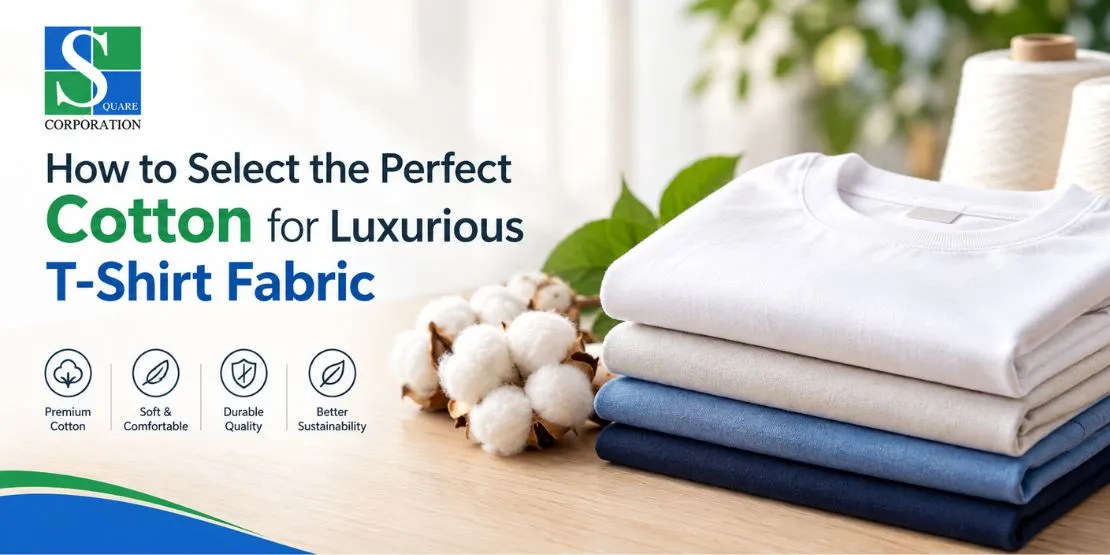
How to Select the Perfect Cotton for Luxurious T-Shirt Fabric

The best T-shirt begins with the texture of the cloth used. Soft to the touch, lightweight to wear during hot seasons, and durable, the best type of cotton can transform the basic T-shirt into something exceptional. Collaboration with trusted Supima cotton suppliers in India can be of great importance when finding the best cotton required for making high-quality clothes. The choice of the best fiber material is also essential in terms of the appearance of the shirt after repeated washing.

But not all types of cotton are the same. The length of the fiber, softness, durability, color, and weight of the fabric should be taken into consideration while selecting the right cotton for T-shirts. By being aware of these important things, you will know which fabric to choose.

Various Ways to Select the Perfect Cotton for Luxurious T-shirt Fabric

The appropriate type of cotton will make an ordinary T-shirt into a luxurious garment. The quality of the fiber and the feel of the cloth all matter in picking out cotton that looks good, feels soft, and lasts a long time.

Check the fiber length

The length of the fiber is very significant in terms of the selection of cotton. The longer the fiber, the better the yarn formed, thus giving you softer surfaces and clean finishes. This is very significant for luxury T-shirts. It is also important for minimizing pilling if the right processing is done.

Compare supplier quality and consistency

It is very important that your supplier choice affects your final product. Choose suppliers who provide accurate details on fiber quality, testing, production, and shipment. Consistency is very important, particularly for the T-shirts produced seasonally. It is necessary that when you deal with Indian textile exporters, you ask them for samples, product details, quality reports, and production capacity.

Pay attention to cotton softness

The softness of a good T-shirt is generally the first feature that is noticed. Cotton of good quality provides a comfortable and soft feeling without being very heavy. The softness of the material is also determined by the finishing techniques used. Samples can be offered by the suppliers to evaluate the cotton. You should feel the cotton with your hands and examine it on your skin. Ideally, you should wash the sample for better evaluation of the fabric.

Consider the yarn quality

Cotton fibers are only the start. The act of spinning plays an important role in the quality of the final T-shirt. Things like yarn count, twist, and the type of spinning used play a key role. Fine yarns lead to light, thin T-shirts, while coarse yarns make heavy, substantial T-shirts. Select your yarn depending on the kind of T-shirt you want to make.

Check color and dye performance

The T-shirt needs to maintain its color despite regular washes. The quality of the material, dye, and finishing will determine the color performance of the shirt. Low-quality material can cause fading, discoloring, or uneven color. You need to request the dyed sample before ordering bulk orders. Wash it several times following the recommended instructions and examine the result. This small test will give you some idea of the color of the future T-shirts and prevent quality issues during manufacturing.

Conclusion

In selecting the material for a high-end T-shirt, one should place more emphasis on the fiber’s length, strength, cleanliness, and quality of the yarn besides softness. Get samples tested, correspond with the sellers, and pay attention to quality instead of cost.

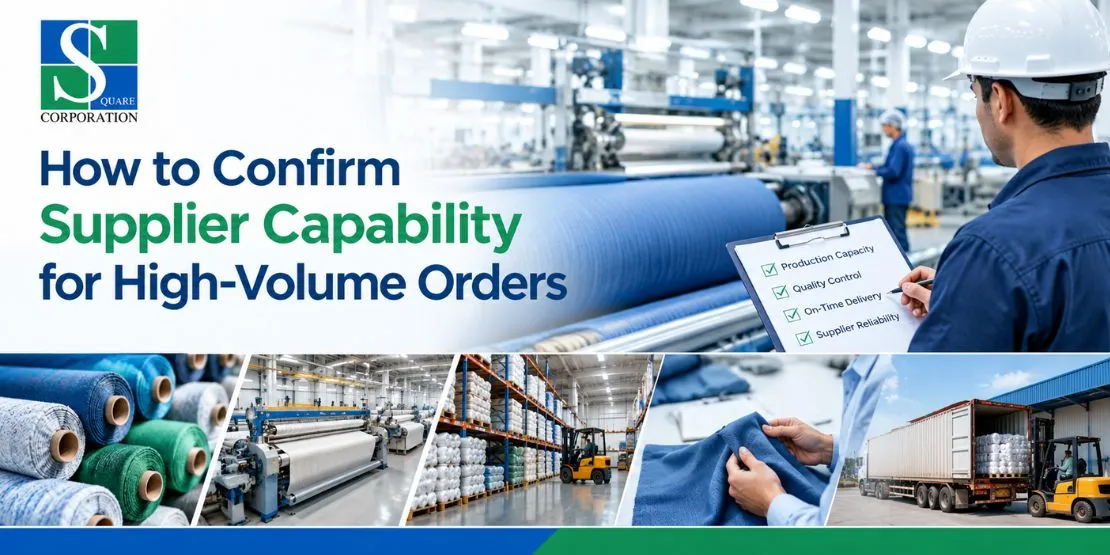
How to Confirm a Supplier’s Capability for High-Volume Orders

Large orders may seem great on paper; however, things get serious once a supplier needs to supply thousands of pieces without sacrificing quality and deadlines. Irrespective of whether you are assessing a Ludhiana fabric supplier or any other manufacturing partner, it is crucial to ensure that the manufacturer has the capability, labor force, material, quality control mechanisms, lead time, and experience with large orders prior to making a deal.

In case the selected vendor is capable of meeting big orders, one should make sure the company can scale up to match requirements. One should begin with the company’s performance in the past, with production data and sample products from previous batches. Check the abilities of their machinery and workers, and discuss quality control measures and delivery schedules. In this article, we will give you a list of how to check supplier capability.

Various Ways to Confirm a Supplier’s Capability for High Volume Orders

A large order not only entails favorable prices but also calls for the buyer to ascertain whether the supplier is capable of producing the required number of items.

Verify actual production capacity

You should begin by asking the supplier what quantity they will be able to manufacture in the time period you require. You should not limit yourself to the maximum capacity that the supplier claims to have; you should look at current manufacturing loads, machines, workforce, working shifts, and capacity utilization.

Check financial and operational stability

Big orders may create a strain on the finances, procurement of raw materials, labor, and production of the supplier firm. Think about whether the company seems to be financially sound to handle the order from the start until completion. In the case where the suppliers are textile exporters in India, the buyers have to assess the financial soundness, production capacity, export expertise, and reliability of delivery.

Inspect the factory and production facilities

In any case, make sure you visit the facility or perform an audit independently. Look at the assembly lines, machinery, storage, raw material facilities, quality control, and labor organization. Physical inspection will provide assurance that the facilities match what was told about them during the negotiation process.

Evaluate quality-control procedures

When there is high-volume production, there is a higher chance of inconsistencies when the quality control process is not robust. Inquire from the supplier regarding how their materials, production batches, products, packages, and deliveries are being inspected. It is best if the quality standards are set prior to production, and proper inspection is done.

Analyze lead times and delivery performance

Inquire from the supplier about their average production lead time and ascertain if they can achieve this lead time based on your deadline and quantity requirements. Check the supplier’s past records for on-time deliveries. It is important to consider this procurement measure since late deliveries can have an effect on inventory and customer commitments.

Create a supplier performance scorecard

Use measurable criteria to make the final call instead of just considering the cost. Rank the potential suppliers on their capacity for production, quality, lead times, reliability of delivery, communication, certifications, financial stability, cost, and scalability. Establishing these criteria prior to placing the order will ensure objectivity when comparing different suppliers and will also give you something tangible with which to measure the supplier’s performance post-production.

Conclusion

The confirmation of a supplier’s ability to deliver before giving an order that is likely to be large helps avoid delays and poor quality. The confirmation includes the capacity of production, control of quality, performance, availability of raw materials, financial stability, and scalability.