

Cotton Knit Fabric
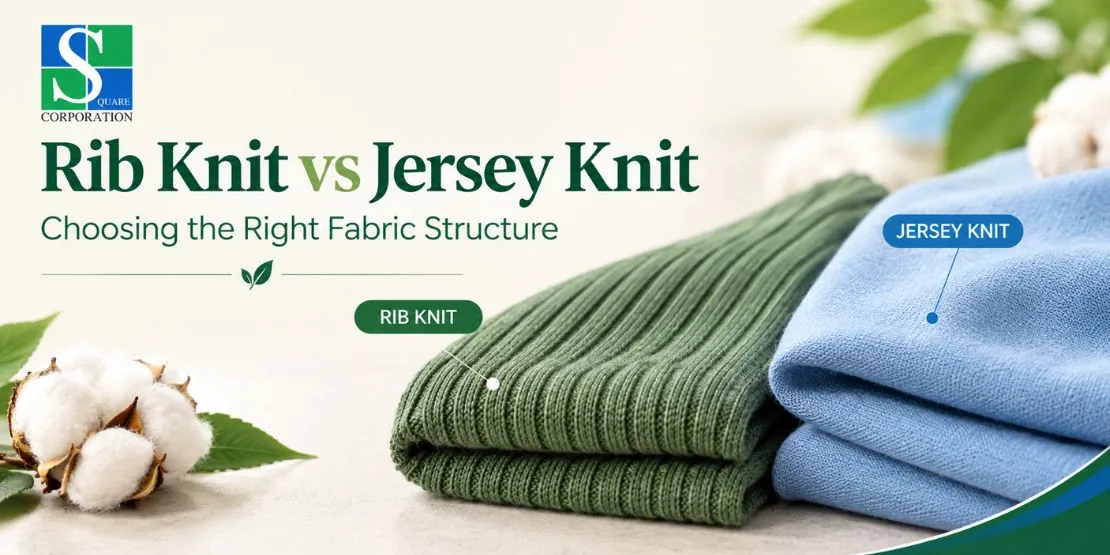
Rib Knit vs Jersey Knit: Choosing the Right Fabric Structure
30 October 2026 | By admin
A small difference in fabric structure can change how a garment fits, feels, and performs. A T-shirt needs a soft feel and a smooth finish, while a sleeve cuff must stretch and return to its original shape. This is why organic cotton producers must look beyond colour and fibre content when choosing fabrics. Rib knit and jersey knit are two popular options, but each serves a different purpose.
In this blog, we will highlight their key differences and help you choose the right knit fabric for your products.
What is the Difference between Rib Knit and Jersey Knit?
Both Rib Knit and Jersey Knit fabrics use interlocking yarn loops. However, their knitting structures create different textures, stretch levels, and uses. Let’s explore the most common yet significant differences between Rib Knit and Jersey Knit fabrics.
1. What is Rib Knit Fabric?
Rib knit fabric features raised vertical lines that give it a textured appearance. Its structure lets it stretch across the width and return to its original shape when the fibre blend and quality support good recovery.
Manufacturers often use rib knit for garments that need a close fit or flexible edges. It also adds texture to simple clothing designs. The common uses of Rib Knit fabrics include:
- Cuffs, collars, and waistbands
- Fitted tops and dresses
- Neckbands and other garment trims
2. What is Jersey Knit Fabric?
Jersey knit has a smooth front and a slightly textured back. Manufacturers often choose it for its soft feel, comfortable fit, and natural drape. Cotton jersey works well for everyday clothing, while blended versions can offer different levels of stretch and durability.
Jersey knit is a popular choice for:
- T-shirts and casual tops
- Dresses and lightweight clothing
- Comfortable everyday wear
Rib Knit vs Jersey Knit: Key Differences
Understanding how these fabrics perform can help you select the right material for your product range. Below are some key differences between Rib Knit and Jersey Knit fabrics.
Texture and Appearance
The first notable difference that makes the two fabrics different is their texture and appearance. Rib knit features visible vertical ridges on both sides. This texture adds depth to a garment and works well for fitted designs.
Jersey knit offers a smoother surface and a clean finish. It suits simple designs, printed T-shirts, and garments that need a soft drape.
Stretch and Shape Retention
Rib knit usually offers greater crosswise stretch than standard single jersey. It can fit closely around the body and work well in areas that need flexibility.
Jersey knit offers moderate stretch, mainly across its width. Its performance depends on the yarn, fibre blend, and knitting method. Adding elastane can improve stretch and recovery.
Comfort and Fabric Weight
Both Rib Knit and Jersey Knit fabrics can feel soft and comfortable. However, their weight depends on yarn type, stitch density, and finishing.
Lightweight jersey works well for warm-weather clothing. Rib knit suits fitted garments and flexible trims. Hence, buyers should compare fabric samples before choosing a material for large-scale production.
How to Choose the Right Knit Fabric for Your Products
Your choice should match the purpose of the garment, its design, and the needs of your customers. You can choose rib knit when you need extra stretch, a close fit, or flexible garment edges.
You can choose jersey knit when you want a smooth surface, soft drape, and comfortable everyday wear. Don’t forget to compare fabric samples to check thickness, stretch, recovery, colour, and finish before placing a bulk order.
The Conclusion
In summary, both Rib knit and jersey knit each offer distinct benefits. Rib knit works well for fitted garments and flexible trims, while jersey knit suits T-shirts, casual clothing, and lightweight designs. The right choice depends on your product specifications, quality standards, and target market.
At Square Corporation, we offer a wide range of knitted fabrics, yarns, and textile solutions for apparel brands and manufacturers. With a focus on quality, invention, and responsible sourcing, we help businesses meet changing market needs. Contact Square Corp, a reputable textile supplier in Punjab, today to explore our textile solutions and find the right fabric for your next collection.
 Previous Post
Recent Posts
Why is Cotton Preferable in Today’s Thermal Fabrics?
How to Reduce Fabric Wastage in Cotton Garment...
Fabric Sourcing: Quality & Consistency for Jeans Manufacturers

Why Pre-Shipment Inspections Are Vital for Quality Assurance...