

Babywear Manufacturers
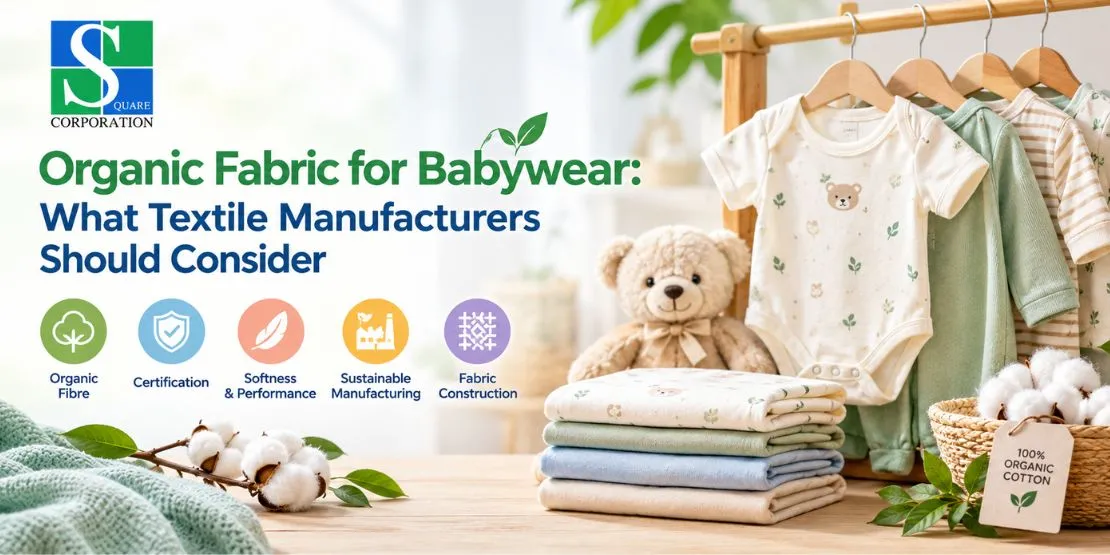
Organic Fabric for Babywear: What Textile Manufacturers Should Consider
30 September 2026 | By admin
For textile businesses manufacturing babywear, fabric quality is a vital consideration. A tiny romper, a soft sleep suit, or a simple cotton bodysuit may look like an ordinary garment, but behind every piece lies a huge responsibility.
Babywear fabric should be comfortable and perform well after repeated washing. That’s why the biggest textile exporters in India pay close attention when choosing organic fabric for babywear. From selecting sustainable fibre to garment processing, certification, and fabric construction, each step deserves careful consideration. Babywear brands must focus on reliable sources of organic fabric that meet buyers’ expectations.
Let’s explore this blog to understand what textile manufacturers should consider when choosing organic fabric for babywear.
What Textile Manufacturers Should Consider for Babywear
A babywear manufacturing company must focus on a few essential aspects while choosing reliable organic fabric sourcing; let’s discuss it in detail.
Start with the right organic fibre
The foundation of premium-quality babywear mainly depends on the fibre. From the perspective of many trusted and renowned babywear manufacturers, organic cotton is the most relevant option because of its natural feel. Through different yarn and fabric constructions, babywear is produced, and it intentionally supports garment quality.
Certification is more than a label
When you manufacture babywear for international markets, certification deserves serious attention. GOTS (Global Organic Textile Standard) is particularly relevant because it covers organic textile processing, not just the farming stage.
If a garment manufacturing business is developing an organic babywear collection for export, checking certification at the fabric-sourcing stage can help prevent compliance issues later.
Softness matters along with fabric performance
Babywear fabric should feel wonderfully soft when you first touch it. As babywear goes through frequent washing, drying and folding, considering a reliable and suitable fabric option is highly recommended.
Breathability, yarn quality, dimensional stability, colour fastness, and durability after repeated washing are key features of reliable, high-quality organic fabric. The goal isn’t just soft fabric; it’s fabric that stays comfortable and functional all day.
Think about the entire manufacturing journey
Focusing on organic farming while overlooking what happens afterwards is a serious mistake babywear manufacturers make. Once the cotton leaves the farm, it passes through several stages. Each stage influences the final textile and enhances the overall textile journey.
Babywear manufacturers should therefore ask cotton yarn traders and suppliers about the advanced processing practices, dyeing and finishing methods, chemical management, wastewater practices, certification coverage, and quality control process.
Do not ignore fabric construction
‘Organic fabric’ describes the fibre sourcing approach, but the final experience depends on fabric construction. For babywear manufacturing, knitted and woven fabrics offer different characteristics; that’s why babywear manufacturers should match fabric construction to the garment’s purpose rather than choosing organic fabric based only on its sustainability credentials.
Conclusion
The right material type can make a meaningful difference in manufacturing babywear. If you are a textile manufacturer looking for certified organic cotton, Square Corporation can help by providing suitable organic fabric sourcing. You can connect with us to discuss your organic textile sourcing requirements and create a vast range of reliable babywear collections.
 Previous Post