
Organic Cotton Archives - Square Corporation
textile mills in punjab square textile company square manufacturing company textile manufacturer

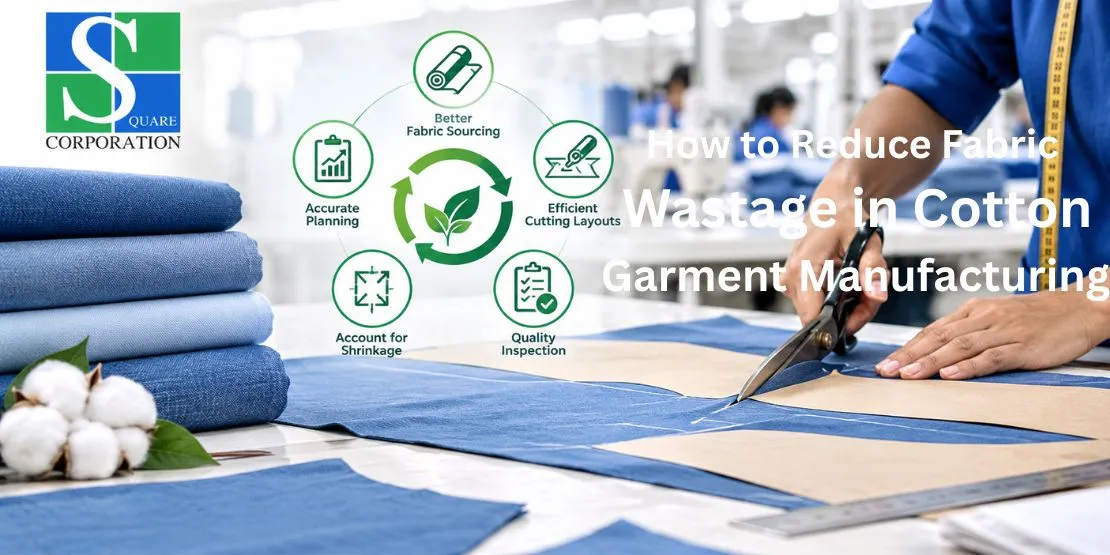
How to Reduce Fabric Wastage in Cotton Garment Manufacturing

Cotton garment manufacturing is one of the most unique tasks where every meter of fabric matters. From the first roll arriving at the manufacturing unit to the final garment leaving the stitching line, every decision affects material consumption, production costs, and overall efficiency. However managing the fabric wastage is a major challenge for garment manufacturers.

An inefficient cutting layout, inaccurate measurements, and poor coordination between sourcing and production teams can turn valuable cotton fabric into avoidable waste. However, even with expensive machinery or a complete manufacturing process overhaul, you cannot eliminate fabric wastage. A trusted textile trading company in India can reduce fabric wastage by choosing the right fabric, improving planning, and paying attention to every detail that influences production.

Now let’s explore this blog to understand how to reduce fabric wastage in cotton garment manufacturing.

Process of Reducing Fabric Wastage in Garment Manufacturing

If you want to reduce fabric wastage in garment manufacturing, this section can help.

Choose the right cotton fabric for production

Choosing a reliable, quality fabric that suits the garment design, fit, and production requirements helps avoid manufacturing problems. An unsuitable fabric width may leave more unused space between garment patterns.

Unexpected shrinkage may affect the garment dimensions, while inconsistent fabric quality can lead to fabric rejection. Thus, before placing a fabric order, the textile manufacturer must evaluate fabric composition, thickness, width, and quality consistency.

Improve marker making and cutting layouts

Marker making is one of the most important stages in controlling fabric consumption. It supports arranging garment pattern pieces on the fabric to use material efficiently, align prints, and meet design specifications.

Across a high-volume production run, these gaps can add up to a considerable amount of unused fabric. Textile manufacturers can improve cutting efficiency by reviewing different pattern arrangements before cutting, and considering fabric grain, directional prints, and pattern.

Inspect cotton fabric before it reaches the cutting tables

Discovering a fabric defect after garment pieces can be expensive. Depending on the fabric defect and its location, the affected pieces can be replaced or rejected. That’s why pre-production inspection can help identify potential issues before they spread across an entire order.

Look for specific concerns such as holes, stains, and visible surface damage. Manufacturers should establish clear inspection procedures and record the defects.

Consider shrinkage before finalizing patterns

Cotton fabric can change dimensions during washing, steaming, dyeing, and other finishing processes. If manufacturers do not account for these changes during pattern development, garments may fail to meet their intended measurements. This results in rejected pieces, rework, and additional fabric consumption.

To reduce the risk, textile manufacturers should test the fabric samples under conditions that reflect the intended production process. A few practical steps can help test the shrinkage in both length and width. Base shrinkage allowance on actual results rather than assumptions.

Plan fabric consumption more accurately

Accurate fabric consumption planning gives manufacturers a clear picture of how much material is actually required. Understanding the consumption level can help identify fabric shortages and plan urgent additional purchases from trusted Supima cotton suppliers in India.

To improve production planning and reduce wastage, textile manufacturers should finalize garment specifications and size ratios before calculating requirements. Comparing the estimated consumption with actual usage after production is a vital consideration.

Conclusion

Choosing the right quantity of fabric for textile production is a vital consideration in manufacturing. However, by applying material specifications, quality expectations, and production requirements, you can protect your manufacturing business by reducing fabric wastage. At Square Corporation, you can discuss your sourcing requirements and bulk fabric needs to run your production efficiently.
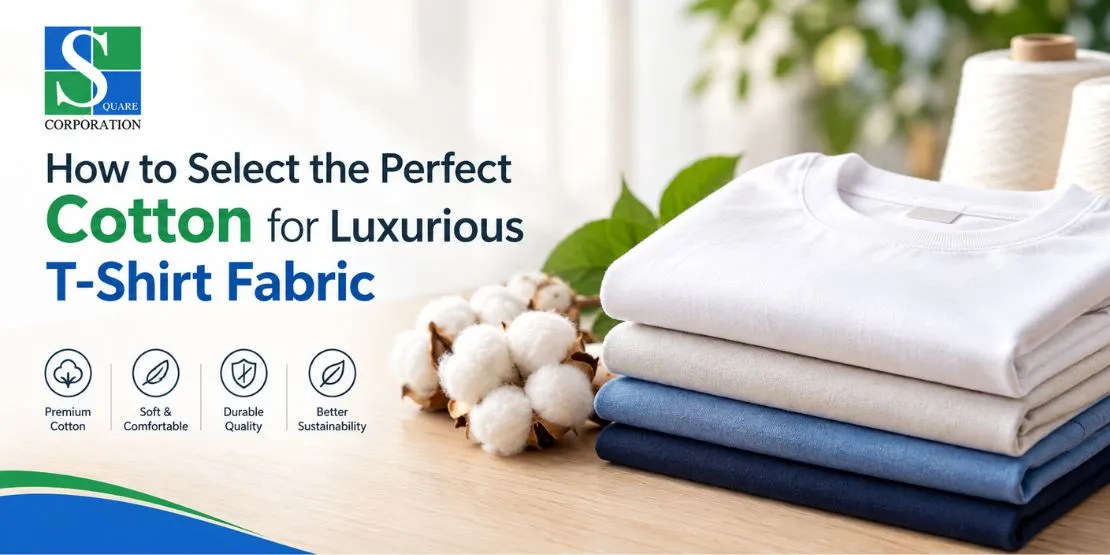
How to Select the Perfect Cotton for Luxurious T-Shirt Fabric

The best T-shirt begins with the texture of the cloth used. Soft to the touch, lightweight to wear during hot seasons, and durable, the best type of cotton can transform the basic T-shirt into something exceptional. Collaboration with trusted Supima cotton suppliers in India can be of great importance when finding the best cotton required for making high-quality clothes. The choice of the best fiber material is also essential in terms of the appearance of the shirt after repeated washing.

But not all types of cotton are the same. The length of the fiber, softness, durability, color, and weight of the fabric should be taken into consideration while selecting the right cotton for T-shirts. By being aware of these important things, you will know which fabric to choose.

Various Ways to Select the Perfect Cotton for Luxurious T-shirt Fabric

The appropriate type of cotton will make an ordinary T-shirt into a luxurious garment. The quality of the fiber and the feel of the cloth all matter in picking out cotton that looks good, feels soft, and lasts a long time.

Check the fiber length

The length of the fiber is very significant in terms of the selection of cotton. The longer the fiber, the better the yarn formed, thus giving you softer surfaces and clean finishes. This is very significant for luxury T-shirts. It is also important for minimizing pilling if the right processing is done.

Compare supplier quality and consistency

It is very important that your supplier choice affects your final product. Choose suppliers who provide accurate details on fiber quality, testing, production, and shipment. Consistency is very important, particularly for the T-shirts produced seasonally. It is necessary that when you deal with Indian textile exporters, you ask them for samples, product details, quality reports, and production capacity.

Pay attention to cotton softness

The softness of a good T-shirt is generally the first feature that is noticed. Cotton of good quality provides a comfortable and soft feeling without being very heavy. The softness of the material is also determined by the finishing techniques used. Samples can be offered by the suppliers to evaluate the cotton. You should feel the cotton with your hands and examine it on your skin. Ideally, you should wash the sample for better evaluation of the fabric.

Consider the yarn quality

Cotton fibers are only the start. The act of spinning plays an important role in the quality of the final T-shirt. Things like yarn count, twist, and the type of spinning used play a key role. Fine yarns lead to light, thin T-shirts, while coarse yarns make heavy, substantial T-shirts. Select your yarn depending on the kind of T-shirt you want to make.

Check color and dye performance

The T-shirt needs to maintain its color despite regular washes. The quality of the material, dye, and finishing will determine the color performance of the shirt. Low-quality material can cause fading, discoloring, or uneven color. You need to request the dyed sample before ordering bulk orders. Wash it several times following the recommended instructions and examine the result. This small test will give you some idea of the color of the future T-shirts and prevent quality issues during manufacturing.

Conclusion

In selecting the material for a high-end T-shirt, one should place more emphasis on the fiber’s length, strength, cleanliness, and quality of the yarn besides softness. Get samples tested, correspond with the sellers, and pay attention to quality instead of cost.

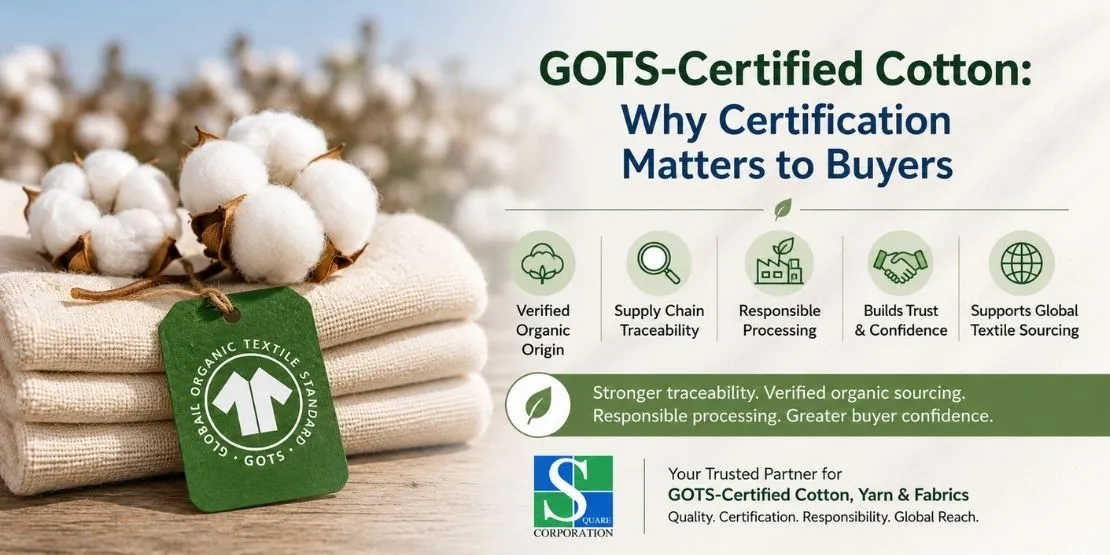
GOTS-Certified Cotton: Why Certification Matters to Buyers

A cotton product may look natural, feel soft, and carry an “organic” claim. However, what happens before it reaches the buyer matters as much. Today, textile buyers want more than attractive fibers and competitive prices. They want proof of responsible sourcing, reliable quality, and transparent production. For a textile exporter in Ludhiana, aligning with recognized sustainability standards can help meet these evolving buyer expectations.

This is where GOTS certification becomes significant. The Global Organic Textile Standard (GOTS) covers organic textile processing and supply chains through independent third-party certification. In this blog, we will highlight why GOTS-certified cotton matters to buyers and what makes it a dependable choice for modern textile sourcing.

Why GOTS Certification Matters to Cotton Buyers

Here are the reasons why GOTS certification matters to cotton buyers.

It Provides Verified Organic Origin

The first notable reason GOTS certification matters to cotton buyers is that it provides verified organic cotton. Simply calling cotton “organic” does not provide enough assurance about the complete textile supply chain. GOTS requires certified organic raw materials and sets requirements for their processing.

GOTS-certified products must consist of at least 70% certified organic fibers, with stricter requirements for products carrying the “organic” label grade. For buyers, this offers greater confidence when sourcing organic cotton for apparel, home textiles and other products.

It Supports Supply Chain Traceability

Do you know how important traceability has become in global textile sourcing? Nowadays, buyers need to know where materials come from and how they are processed. GOTS certification covers the supply chain from post-harvest handling through processing and trading. Independent certification bodies inspect certified operators, while Scope Certificates and Transaction Certificates provide additional documentation. This makes sourcing more transparent and helps buyers manage supply-chain risks.

It Promotes Responsible Processing

Another very prominent advantage of GOTS certification is that it promotes responsible processing. In recent times, GOTS is not limited to cotton farming. It also addresses environmental and social practices during textile processing. Its requirements cover areas such as chemical inputs, wastewater treatment, and worker-related standards. For businesses with sustainability goals, certified cotton can therefore support more responsible production.

It Builds Buyer and Customer Trust

In today’s competitive textile market, sustainability claims need credibility. Third-party certification gives buyers stronger evidence than an unsupported supplier claim. GOTS itself describes certification as a risk-management tool and an independent verification mechanism. This can help brands communicate their sustainability efforts with greater confidence.

It Supports Global Textile Sourcing

International buyers often look for suppliers that can meet recognized sustainability and compliance requirements. At Square Corporation, we work with certified organic cotton sourcing networks. We offer GOTS-certified organic cotton, along with yarn and fabric solutions for domestic and international markets. We work with more than 8,000 farmers across Maharashtra and focus on quality control, traceability, and responsible sourcing.

The Conclusion

To sum up, GOTS certification is not only about a sustainability label. For textile buyers, it can mean stronger traceability, verified organic sourcing, responsible processing, and greater confidence in the supply chain. As demand for sustainable textiles continues to grow, choosing the right certified supplier can make a meaningful difference.

Are you looking for GOTS-certified organic cotton, premium yarn, or sustainable fabric solutions from India? Then connect with Square Corporation. With our focus on quality, certification, responsible sourcing, and global textile supply, Square Corporation can help businesses build a more reliable, sustainability-focused sourcing strategy. So why wait? Contact Square Corporation, the best yarn merchant exporters in India, now.