
October 2026 - Square Corporation
textile mills in punjab square textile company square manufacturing company textile manufacturer

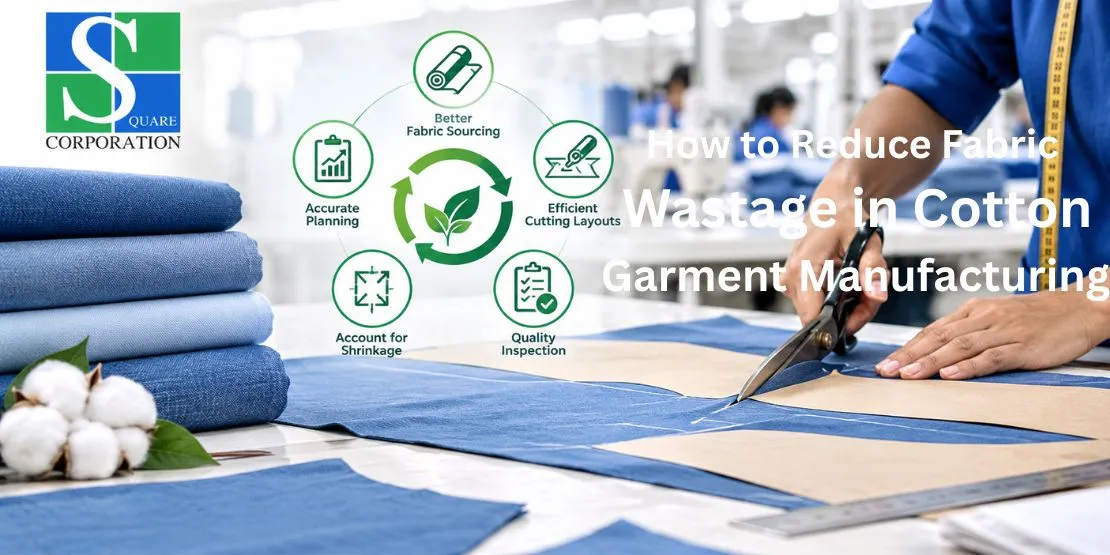
How to Reduce Fabric Wastage in Cotton Garment Manufacturing

Cotton garment manufacturing is one of the most unique tasks where every meter of fabric matters. From the first roll arriving at the manufacturing unit to the final garment leaving the stitching line, every decision affects material consumption, production costs, and overall efficiency. However managing the fabric wastage is a major challenge for garment manufacturers.

An inefficient cutting layout, inaccurate measurements, and poor coordination between sourcing and production teams can turn valuable cotton fabric into avoidable waste. However, even with expensive machinery or a complete manufacturing process overhaul, you cannot eliminate fabric wastage. A trusted textile trading company in India can reduce fabric wastage by choosing the right fabric, improving planning, and paying attention to every detail that influences production.

Now let’s explore this blog to understand how to reduce fabric wastage in cotton garment manufacturing.

Process of Reducing Fabric Wastage in Garment Manufacturing

If you want to reduce fabric wastage in garment manufacturing, this section can help.

Choose the right cotton fabric for production

Choosing a reliable, quality fabric that suits the garment design, fit, and production requirements helps avoid manufacturing problems. An unsuitable fabric width may leave more unused space between garment patterns.

Unexpected shrinkage may affect the garment dimensions, while inconsistent fabric quality can lead to fabric rejection. Thus, before placing a fabric order, the textile manufacturer must evaluate fabric composition, thickness, width, and quality consistency.

Improve marker making and cutting layouts

Marker making is one of the most important stages in controlling fabric consumption. It supports arranging garment pattern pieces on the fabric to use material efficiently, align prints, and meet design specifications.

Across a high-volume production run, these gaps can add up to a considerable amount of unused fabric. Textile manufacturers can improve cutting efficiency by reviewing different pattern arrangements before cutting, and considering fabric grain, directional prints, and pattern.

Inspect cotton fabric before it reaches the cutting tables

Discovering a fabric defect after garment pieces can be expensive. Depending on the fabric defect and its location, the affected pieces can be replaced or rejected. That’s why pre-production inspection can help identify potential issues before they spread across an entire order.

Look for specific concerns such as holes, stains, and visible surface damage. Manufacturers should establish clear inspection procedures and record the defects.

Consider shrinkage before finalizing patterns

Cotton fabric can change dimensions during washing, steaming, dyeing, and other finishing processes. If manufacturers do not account for these changes during pattern development, garments may fail to meet their intended measurements. This results in rejected pieces, rework, and additional fabric consumption.

To reduce the risk, textile manufacturers should test the fabric samples under conditions that reflect the intended production process. A few practical steps can help test the shrinkage in both length and width. Base shrinkage allowance on actual results rather than assumptions.

Plan fabric consumption more accurately

Accurate fabric consumption planning gives manufacturers a clear picture of how much material is actually required. Understanding the consumption level can help identify fabric shortages and plan urgent additional purchases from trusted Supima cotton suppliers in India.

To improve production planning and reduce wastage, textile manufacturers should finalize garment specifications and size ratios before calculating requirements. Comparing the estimated consumption with actual usage after production is a vital consideration.

Conclusion

Choosing the right quantity of fabric for textile production is a vital consideration in manufacturing. However, by applying material specifications, quality expectations, and production requirements, you can protect your manufacturing business by reducing fabric wastage. At Square Corporation, you can discuss your sourcing requirements and bulk fabric needs to run your production efficiently.
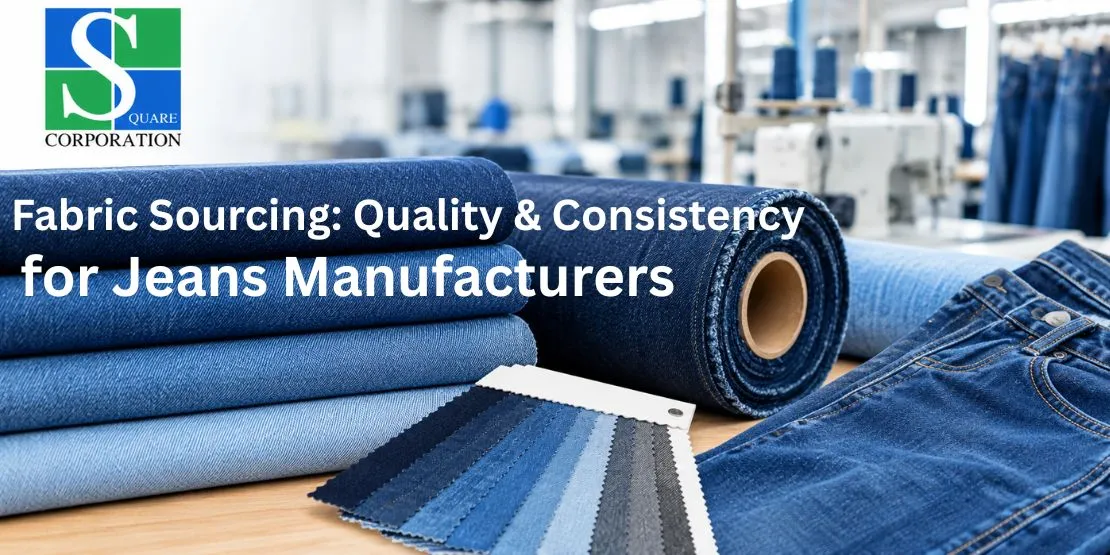
Fabric Sourcing: Quality & Consistency for Jeans Manufacturers

Denim has a legacy and attractive charm that you cannot deny. It can be rugged, yet it delivers comfortable, timeless style and fashionable trends through innovation. However, behind a great pair of jeans, consistent, quality denim fabric matters. For jeans manufacturers, fabric sourcing is much more than finding an attractive shade of indigo.

The right denim fabric must meet the garment’s design requirements and deliver great performance. That’s why thoughtful denim fabric sourcing from top sustainable fabric suppliers in India matters. Understanding key fabric quality, carefully evaluating suppliers, and analyzing fabric consistency before bulk production help keep the supply chain running smoothly.

Now let’s explore this blog to ascertain why denim fabric sourcing matters to maintain quality and consistency for jeans manufacturers.

Why Denim Fabric Sourcing Matters for Quality & Consistency

If jeans manufacturers want to know why denim fabric sourcing matters a lot for quality and consistency, this section can clarify the matter,

Start with the right denim fabric specification

Before requesting bulk quotations, manufacturers should discuss what they actually need. A clear specification helps jeans manufacturers choose the right fabric. Fabric weight influences the fabric’s feel, drape, and structure for different garments. Traditional denim is commonly made from cotton, while stretch denim may incorporate elastane or other fibers.

Look beyond appearance when evaluating denim quality

A beautiful denim sample can grab a manufacturer’s attention; however, appearance alone isn’t enough to make a denim fabric suitable for commercial production. For stretch denim, evaluate how well the fabric returns to its original dimensions after being extended. Assess tensile strength, tear resistance, and abrasion performance based on the garment’s intended use.

Why shrinkage testing is vital

A jeans manufacturer can develop a new slim-fit jean collection, but after washing, the finished jeans may shrink more than expected. In that case, the fit no longer matches the approved sample, creating major complications. That’s why shrinkage needs to be evaluated early.

Denim can change dimensionally during relaxation, garment washing, drying, and other finalizing processes. The extent of change depends on the fabric construction, fiber composition, and processing conditions.

Maintain color consistency in every production

Color is one of the most recognizable features of denim jeans. From deep indigo and washed blue to charcoal, black, and vintage-inspired shades, the intended color drives denim production. Differences in dyeing conditions, finishing, fabric lots, and washing treatment can create visible variations in denim production.

Achieve batch-to-batch denim consistency

For reputed jeans brands, color consistency is more important than receiving top-notch fabric. The same jeans may need to be manufactured repeatedly over several months, and buyers expect it to retain its defining features. A reliable denim sourcing process mainly focuses on maintaining complete fabric specifications, including fabric composition, weight, color, and width.

Choose a denim fabric supplier based on more than price

Price is not always the most important factor when sourcing textiles. However, choosing a trusted denim supplier, or one of the biggest textile exporters in India, is a vital consideration alongside price.

A dependable supplier should be able to discuss the fabric’s intended use, provide samples, and clearly explain how it will manage quality concerns. For international buyers, proper communication, export documentation, shipping coordination, and packaging matter a lot.

Conclusion

Finding the right denim fabric is the most important step toward producing branded jeans that meet brand expectations. If you are searching for a reliable fabric for your jeans manufacturing business, Square Corporation can fulfill your requirements. Explore our portfolio online and contact our team to discuss your requirements.

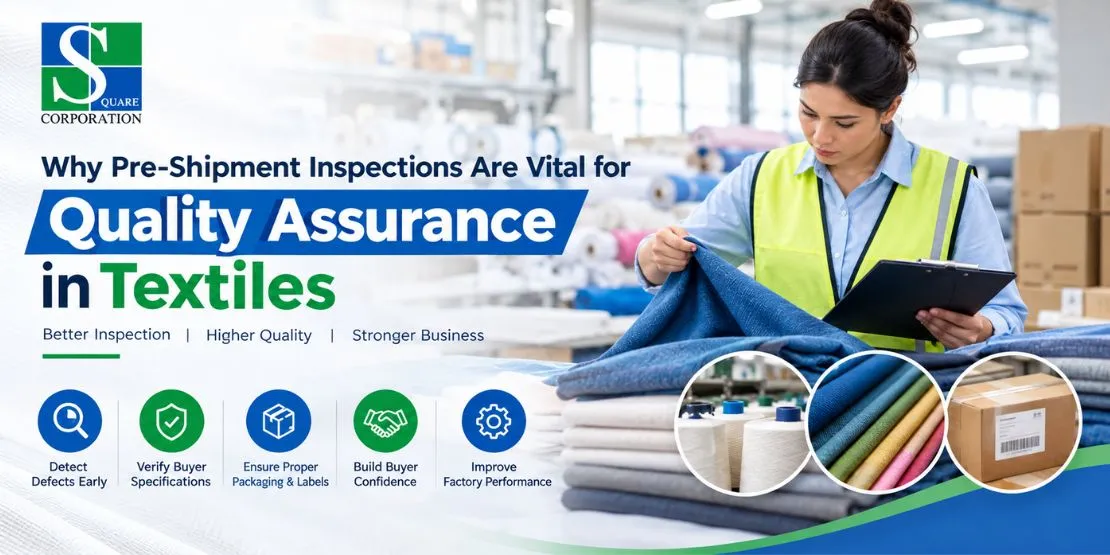
Why Pre-Shipment Inspections Are Vital for Quality Assurance in Textiles

A small error can bring down the whole shipment, and just one error can be sufficient to break down the confidence of the buyers in the textile industry. When factories work under pressure, they make mistakes like missing a single stitch and using the wrong color, causing buyers to send back their orders and lose business. It is highly significant for cotton yarn exporters to have pre-shipment inspection.

Boxes should have an appropriate number of parts. This team is responsible for inspecting construction, color, and dimensions. This team inspects the packaging for durability and the yarn for its thickness, twist, and strength. Any problem will be solved easily now. It will save time and money for both the buyer and seller.

Various Ways Pre-Shipment Inspections Are Vital for Quality Assurance in Textiles

Pre-shipment inspection is an essential process in the textile industry because of the need for quality assurance before the shipment of goods. It helps detect defects and confirm specifications.

Checks product quality before shipment

Pre-Shipment Inspection is carried out for the purpose of conducting a preliminary quality check on the product before shipping. This involves inspection of fabric quality, stitching, measurements, color, finish, labels, and overall appearance. Pre-shipping inspection can be considered analogous to luggage inspection prior to departure from the airport. Fixing problems at the source is always easier than fixing them at the destination.

Confirms the buyer’s specifications

Textile orders have their own specific requirements, which may relate to material type, GSM, color, size, stitching, packaging, and labeling. Pre-shipping inspection is done to ensure that the products meet the specified requirements. This avoids making products that will fail to meet the customer’s expectations. In the case of textile exporters in India, this process will ensure product quality and good relationships with foreign buyers.

Protects against color and fabric issues

Color uniformity is of great importance in the textile industry. Although the buyer may have agreed on a specific color for the cloth, it may turn out that the end product is not uniform because of some faults in dyeing and finishing processes.

Checks packaging and labels

Even good products require proper packaging. Damage to cartons, labels, barcodes, and folding may lead to issues in transport and delivery. Such an inspection is done to check these aspects prior to shipment. This will help ensure that products are properly packaged and ready to be handled.

Builds buyer confidence

Buyers from overseas need to be assured that their order will meet all the requirements that were agreed upon. Inspection guarantees this, and buyers are more confident in the transportation of products from the factory.

Improves factory performance

Inspections are not only done to find defects. Inspections also help detect weaknesses in the manufacturing process. If an inspection consistently reveals loose stitches, the factory can check the machinery, labor, and production process. Such minor changes will eventually translate into improved production quality.

Finds defects early

Defects that start out small can be a major problem when the order reaches its destination. Some of the things that may be found through inspection include holes, stains, split seams, poor dyeing, and even broken threads or torn fabric.

Conclusion

Pre-shipment inspection ensures that textile goods are of good quality and are within the desired measurements and packaging. Businesses get a chance to avoid disputes and returns because problems are solved at the time of pre-shipment. Pre-shipment inspection is a very easy procedure.