Fabric Archives - Square Corporation
textile mills in punjab square textile company square manufacturing company textile manufacturer

Breathable Fabrics Explained: Why Natural Fibers Are in Demand

Have you ever noticed how some clothes feel lighter the moment you put them on? It is not always about the design or the fit. Sometimes, the real comfort comes from the fabric itself. We all know that fashion trends keep changing every season, but comfort never goes out of style. Today, more people are paying attention to what their clothes consist of. This is one of the biggest reasons why natural fibers are making a strong comeback. Do you know where the journey of a comfortable cotton fabric truly begins? It starts with reputable cotton yarn exporters who source carefully selected cotton and deliver quality yarn that ensures soft, breathable, and durable textiles.

In this blog, we will discuss why breathable fabrics matter, how natural fibers improve everyday comfort, and why they continue to be the preferred choice for people across the world.

What Makes a Fabric Breathable?

A breathable fabric enables air to circulate freely while helping moisture escape from the body. This process keeps the wearer cool, fresh, and comfortable even during long hours of use.

Many of us are not aware that breathable fabrics also help regulate body temperature. Instead of trapping heat, they allow excess warmth to move out, making them ideal for both hot summers and humid climates.

Why are Natural Fabrics Becoming More Popular?

Natural fibers like cotton, linen, hemp, bamboo, and wool are gaining popularity for several reasons. Unlike many synthetic materials, they allow better airflow, absorb moisture effectively, and offer exceptional comfort throughout the day. Do you know that cotton can absorb a considerable amount of moisture without feeling damp? Similarly, linen dries quickly and promotes excellent ventilation, making it a preferred fabric for warm and humid climates. As people become more conscious about comfort and sustainability, the demand for natural fabrics continues to grow. The key reasons behind their increasing popularity include the following:

Comfort That Lasts Throughout the Day

Breathable natural fibers reduce sweat build-up, keep the body cool, and prevent clothes from sticking to the skin. Whether you are at work, traveling, or spending time outdoors, these fabrics can provide lasting comfort.

Skin-Friendly Properties

Another very significant advantage of breathable natural fabrics is their skin-friendly properties. Their soft and gentle texture makes them suitable for children, older adults, and people with sensitive skin. Natural fibers help minimize irritation and provide a pleasant wearing experience.

Excellent Moisture Management

Fabrics like cotton efficiently absorb moisture, while linen dries quickly. This combination keeps the body feeling fresh even in hot, humid weather.

A Better Choice for the Environment

Most natural fibers are biodegradable and renewable. Compared to petroleum-based synthetic fabrics, they have a lower environmental impact and support more sustainable textile production.

Growing Consumer Preference for Sustainability

As awareness about eco-friendly living increases, consumers are choosing fabrics that combine comfort with environmental responsibility. This shift has encouraged textile manufacturers to invest in sustainable fiber production and responsible manufacturing practices.

The Future of Breathable Textiles

Innovation is making natural fabrics even better. How? Modern textile technologies now improve wrinkle resistance, durability, and softness without compromising breathability. This perfect balance of comfort, performance, and sustainability is shaping the future of the global textile industry.

Consumers today want fabrics that feel good, last longer, and support environmentally responsible choices. Natural fibers successfully meet all these expectations.

The Conclusion

Breathable fabrics are no longer just a seasonal preference; they have become an essential part of modern living. Their ability to provide comfort, improve airflow, manage moisture, and support sustainable fashion makes natural fibers more relevant than ever. As consumer expectations continue to evolve, businesses also need dependable partners who understand quality, innovation, and responsible textile solutions.

Are you looking for premium textile products backed by industry expertise and uncompromising quality? Then Square Corp, a leading textile exporter in India, is the name you can trust. Discover advanced textile solutions designed for performance, comfort, and sustainability with Square Corp, and experience the difference that superior fabrics can make.

Why Prioritizing Fabric Quality is Vital for Fashion Enthusiasts

Fashion does not start when clothes end up on the runway or in your wardrobe; fashion starts with the material. In the same way that having a good base will make a house look beautiful, quality materials will decide how your clothes will look and last. Here, consumers and designers who prioritize fashion will choose quality materials in order to ensure durability and comfort. This is the reason why there is an increasing need for Supima cotton suppliers in India.

Each stitch has its own story, but it is the cloth that ensures that the story is never forgotten. Textiles of high quality can withstand wear and tear, retain their form, and provide added comfort. Fashionistas are fond of such textiles because they are able to combine both beauty and durability. With an increase in sustainability becoming a priority for many consumers, the choice of high-quality textiles has become a good choice indeed.

Various Reasons for Prioritizing Fabric Quality are Vital for Fashion Enthusiasts

Fashion must go beyond just good-looking clothes; it should start with great fabrics. Great fabrics will make the clothing more comfortable and durable. This is key to ensuring that all fashion decisions are elegant and long-lasting.

Better comfort throughout the day

When you put on an outfit, what will be the first thing that comes to mind? Most certainly, it would be the feel of the garment against your skin. It does not matter whether it is a nicely tailored cotton shirt or a comfortable linen dress; the feel remains good throughout the day. Take into consideration your favorite T-shirt.

Supports better craftsmanship

Clothing companies that have an eye for choosing better materials are likely to pay more attention to their sewing as well. There are many textile trading companies in India that offer high-quality fabrics, enabling the brands to manufacture better-sewn, more finely finished clothing products.

Colors stay rich and vibrant

There is nothing more frustrating than watching one’s favorite black T-shirt fade into a plain gray one after just a couple of washing cycles. Dyes hold onto high-quality materials better, and that allows them to preserve the vibrancy and clarity of the print. It keeps your clothing fresh and looking good, no matter how often it gets used. Your favorite clothes will look fantastic and give you that stylish look that you want when you wear them.

Breathability makes a huge difference

Good fabric works with your body instead of against it. The use of natural fiber means that there is improved air circulation, allowing you to feel cool even on hot days. That difference becomes obvious during long workdays or outdoor events when breathable clothing simply feels easier to wear.

Less pilling and surface damage

The tiny fuzzy balls that appear on low-quality sweaters can make a new piece of clothing look old and worn out in just a few weeks. The best quality fabric is one that does not pill, as its fibers hold together tightly due to the strength of the fibers. The strength of the fibers makes it possible for the fabric to always look clean and presentable, despite frequent use.

Conclusion

Although fashion styles change, fabric is definitely one of the wisest things that should be considered. Comfort, durability, looks, and even confidence that people have while wearing their clothes depend on the quality of the fabric used. People will not make a mistake if they choose clothes made of high-quality fabric, as they won’t regret such a purchase in the future. Good style is always associated with good fabric.

What Makes Choosing Organic Fabric a Great Choice?

Fashion is an exclusively critical turning point. Consumers, before making the final purchase, prefer to ask questions about the origin, materials used for manufacturing, and many other things.

Today, sustainable textiles are one such option that hardly anyone can ignore. From the type of fiber used to the finishing touch, its future is on its way to get re-woven thread to thread.

Approaching one of the reliable, sustainable textile exporters in India may lead to coming across superb quality organic fibers. In terms of upgradation in terms of quality and comfort, these fibers are no longer a compromise.

What does Sustainable Textile refer to?

Today, sustainable textiles are no longer just a trend. These refer to materials sourced through methods that not only protect people but also the ecosystem and natural resources.

These textiles come from natural and recycled origins that are free of toxic chemicals. Unlike conventional textiles, these fabrics are designed with a full lifecycle in mind, from crop to compost.

As they are grown without the use of pesticides or chlorine, they are built for outlasting highly conventional alternatives. By using less water, skipping synthetic chemicals, and generating less waste, these sustainable textiles cut pollution at almost every stage of production.

Is there Any Comfort Associated with Organic Fabrics?

Unlike synthetic fibers, natural, sustainable, organic textiles are considered to be among the exclusive choices. Even after undergoing several washes, they continue with their softness without losing their actual structural strength.

These dresses not only drape smoothly against the skin, but also help in regulating body temperature naturally. They not only breathe freely, but also hold their shape over time. These fabrics are not only meant for first initial outings, but also for real wear.

How do organic fabrics support ethical fashion and the environment?

Almost every yard of sustainable textiles from where you make your purchase supports a long, clean, and equitable supply chain. The overall process permits keeping the skills of artisans alive, rewarding responsible farming, and contributes to an industry that values people plus product.

In terms of environmental benefits, the list is unending. Some fo the most exclusive advantages that organic fabrics provide are:

  • Low use of water
  • Sustainable use of land during fiber cultivation
  • Zero synthetic chemicals are used in farming and processing
  • Zero use of microplastic shedding
  • Low carbon output

For further confirmation, it will be a wise decision to look for certifications at the time of making a purchase for organic fabric. Those certifications include the following:

  • Fair Trade Certificate
  • Bluesign
  • GOTS
  • OEKO-TEX

These certifications ensure that the fabric you will choose will be free from almost all types of harmful substances.

Organic Fabric, the Future of the Fashion Industry

The shift towards organic textiles today is no longer a niche movement. Designers are rethinking material sourcing. Top yarn suppliers in India, including Square Corporation, have taken the initiative to provide the best organic fabric to customers by considering environmental safety.

The brand serves as a key platform that regulates textile waste and makes use of natural chemicals wisely.

Fabric Sourcing Challenges in 2026 and How Textile Companies Solve Them

Are you dealing with a textile business and facing the problem of getting the best quality fabric at a budget-friendly price? Are you becoming frustrated by fulfilling the need to consumer demand? Actually, these are the real scenarios of a textile business: finding raw materials at budget-friendly prices, managing supply chain disputes, providing textile materials in line with changing consumer demands, and beating market competition.

For garment manufacturers, textile companies, and textile brands, sourcing the right fabric is a major challenge in 2026. In such a challenging situation, finding the top fabric exporters in India can help the textile business access better-quality, innovative textures, and sustainable fabric options to easily beat global textile competition.

Now, let’s dive into this blog to understand the major fabric sourcing challenges in 2026 and how textile companies solve them strategically.

Fabric Sourcing Challenges Textile Companies Face in 2026

In this section, we will describe in detail the major fabric sourcing challenges that textile companies face in 2026.

Rising raw materials costs

One of the biggest concerns in the textile industry is the rising cost of raw materials such as cotton, polyester, viscose, and linen, as well as yarns. Do you want to know which factors affect raw material costs in the textile industry? Have a look at these points-

  • Global inflation
  • Climate-related crop issues
  • Sudden rise in energy costs
  • Transportation expenses

To solve this problem, leading textile companies are diversifying their fabric supplier networks and maintaining an uninterrupted fabric supply. Many businesses are also shifting toward sustainable fabric options to improve cost efficiency without compromising quality.

Disruption in the supply chain

An unstable global supply chain is another major problem for the textile industry. Delayed shipments, container shortages, and geopolitical issues can disrupt production timelines. In the fashion industry, which relies on seasonal production, a minor delay can cause a significant loss.

To beat this problem, smart textile businesses are finding flexible fabric sourcing, maintaining buffer inventory, partnering with reliable fabric manufacturers, and sourcing fabrics regionally whenever possible. When your textile business maintains a strong relationship with a fabric supplier, it reduces fabric sourcing risk and ensures on-time, smooth deliveries.

Growing demand for sustainable fabrics

Sustainability has become a major concern for the textile industry. Nowadays, consumers and global brands mainly prefer eco-friendly fabrics, ethical production practices, and transparent sourcing of raw materials. Most of the textile manufacturers are concerned about a few factors, such as:

  • Whether the fabric is sourced sustainably
  • Is the fabric manufacturing process environmentally friendly?
  • Whether fabric manufacturers use organic materials

All of the above factors seem to be major challenges for a textile manufacturing unit. To solve these problems, textile manufacturers focus on buying organic cotton fabrics, recycled textile materials, water-saving production processes, and sustainable fiber innovations. Textile manufacturing companies that prioritize sustainable textile sourcing attract global buyers and build strong brand value.

Changing fashion trends

As we all know, consumers’ tastes and preferences are changing rapidly in 2026. Today, most buyers expect superior fabric that offers comfort, performance, and sustainability. But due to significant challenges, textile manufacturing companies struggle a lot to keep up with changing fashion trends.

  • Changing seasonal fashion trends
  • Demand for lightweight fabric
  • Smart fabrics
  • Premium finishing quality

These challenges can act as an obstacle to the further development of textile companies. But successful textile companies always stay one step ahead by investing in deep research to identify genuine fabric sources, align with trending fashion, and focus on innovative garment production.

Safety compliance with international standards

Export-focused textile companies always adhere to strict international rules and regulations on chemical safety, worker safety, fabric testing standards, and sustainability certification. These factors are closely associated with sustainable fabric production and global standards.

For textile export companies in India, finding a trusted source of organic, sustainable fabric is a significant challenge. But professional textile manufacturing companies focus on sourcing genuine fabric, maintaining transparency in their fabric sourcing, and adhering to international quality standards.

Conclusion

Though sourcing genuine, certified fabric in 2026 is a significant challenge for textile businesses, with a systematic strategy, you can successfully adapt to changing fashion trends. At Square Corporation, you will get top-notch quality organic fabric that works great with the latest fashion trends and offers long-term value for global buyers.

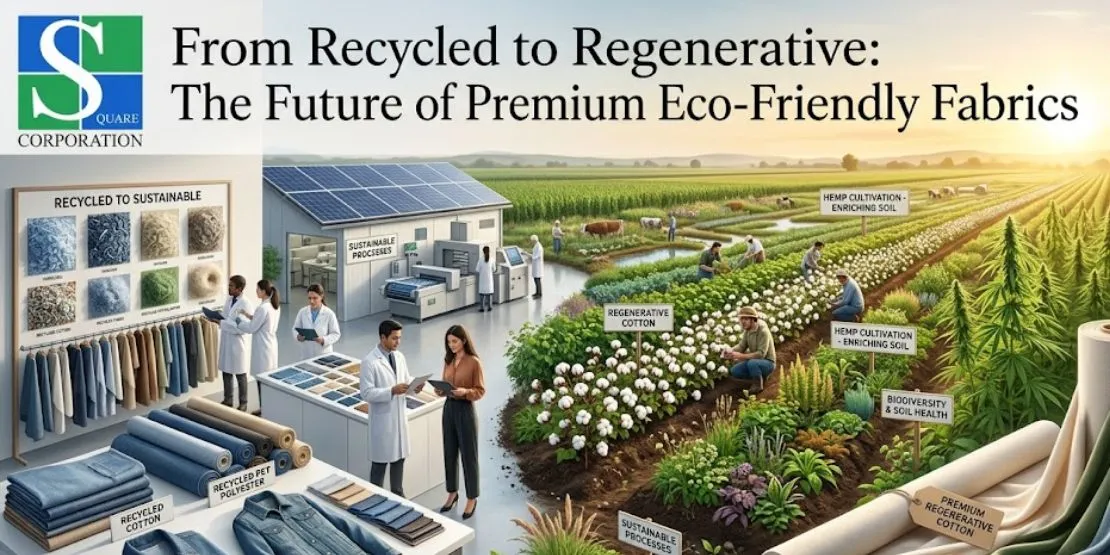
From Recycled to Regenerative: The Future of Premium Eco-Friendly Fabrics

Do you think that in the 21st century, premium fabrics mean only recycled fabric? Most eco-conscious buyers prefer recycled fabric for environmental sustainability. But how do they identify premium-quality recycled fabric? Actually, premium-quality recycled fabrics are verified through their sustainable manufacturing processes. In this scenario, the textile industry can experience a drastic shift in premium-quality and eco-friendly fabric.

Earlier, premium-quality fabric was measured by cost and production scale, but now it is reshaped by innovation and long-term sustainability. This shift has marked a new beginning for the textile industry, moving from recycled to regenerative fabrics. Advanced textile manufacturers seek a trusted Ludhiana fabric supplier to deliver top-notch fabric and meet the needs of eco-conscious consumers.

Now let’s dive into this blog to understand the future of premium eco-friendly fabrics, from recycled to regenerative.

Understand the Shift from Sustainable to Regenerative Fabric

With the changing business scenario and customers’ choices and preferences, sustainability is no longer enough for the textile industry. Sustainable fabrics can reduce the release of harmful toxins, use less water and fewer chemicals, and maintain a clean manufacturing process. Whereas regenerative fabrics, which are a new form of recycled fabric, go one step further. It mainly focuses on restoring the fabric and improving the environment, indicating top-notch fabric quality.

Basically, recycled fabrics focus on reducing waste, sustainable fabrics minimize environmental impact, and regenerative fabrics actively restore ecosystems.

Why Regenerative Fabrics Are the Next Big Leap for the Textile Industry

Regenerative fabric has created a real transformation in the textile industry. It is entirely different from the traditional fabric manufacturing process, which focuses on restoring soil health, increasing biodiversity, and capturing carbon from the atmosphere. It indicates that regenerative fabric not only maintains sustainability but also gives back to Mother Nature.

Let’s discuss a few example that indicates the regenerative fabrics are beneficial for nature-

  1. Regenerative cotton farming improves soil fertility and maintains water retention.
  2. Hemp cultivation enriches soil and needs minimal resources. Hemp not only grows with minimal water but also provides nutrients to the soil, which makes it one of the most regenerative crops.
  3. Bio-based fibers return to the earth safely, maintaining soil integrity and biodiversity.

Future of Eco-Friendly Premium Fabric for the Textile Industry

Premium-quality, eco-friendly fabric, such as regenerative fabric, is highly essential to the textile industry, and top Indian textile exporters are seeking to use it to expand new business opportunities. Let’s discuss it in detail-

Future-proofing your textile business

Global demand for sustainable fabric is shifting towards responsible fabric sourcing. It helps textile brands adopt the most competitive fabric sources that meet consumer demand and deliver higher profit margins.

Enhance product value

Eco-friendly premium fabrics, such as regenerative materials, elevate perceived quality and help your business improve its position in the top-tier market.

Meeting compliance & global standards

Certifications and sustainable benchmarks are vital for the global textile market. When you plan to trade in the global textile business, you need sustainable fabric certification to acquire new customers.

Build trust with customers

Modern customers are very conscious about the products they use. They always focus on eco-friendly, sustainable, premium-quality fabrics that do not harm the environment. They never think about price, but they prioritize quality.

Conclusion

As the textile industry shifts from recycled to regenerative fabrics, it is now your turn to incorporate premium, eco-friendly fabrics into your business. At Square Corporation, you can get premium-quality regenerative fabric, which can be a great turning point for your textile business. You can get top-notch regenerative fabric at an affordable price from us to beat the competition in textiles.

The Role of Eco-Friendly Fabrics in Circular Textile Production

The textile industry is undergoing a drastic transformation to meet global market requirements. As demand for sustainable materials grows rapidly, yarn manufacturers, textile suppliers, and garment brands are exploring how to produce and recycle fabrics in innovative ways. From this point of view, circular textile production offers new hope for cotton yarn manufacturers, textile suppliers, and garment brands.

The main concept of circular textile production is to reduce waste, conserve resources, and keep materials in use for longer. Eco-friendly fabrics are the main influencer of the circular textile production. From organic fibers to recycled yarns, sustainable materials help textile brands expand their businesses in a broader sense.

Let’s explore this blog to understand the role of eco-friendly fabrics in circular textile production.

Interesting Facts about Circular Textile Production

Circular textile production is a system in which materials are designed, manufactured, and reused in a continuous loop. Instead of dumping them in landfills, fabric manufacturers recycle, regenerate, and repurpose them into new products.

Traditional India textile manufacturing mainly depends on virgin raw materials, intensive chemical processing, and a linear consumption process. But after the introduction of circular textile production, the textile industry has experienced significant benefits.

  1. Better resource allocation and efficiency
  2. Reduction of water materials
  3. Recycling and reuse of organic fibers
  4. Sustainable sourcing of raw materials

To reduce environmental impact and increase recyclability, eco-friendly fabrics are a significant part of the circular textile production.

Importance of Organic Fabric in Circular Textiles

In the circular textile production, organic fabrics have huge significance, and we are now describing them in detail-

1. Focus on sustainable yarn

In circular textile production, sustainability is at the heart of the process, starting with sustainable yarns. Yarn manufacturers primarily ascertain the raw material consumption for fabrics, including organic cotton yarn, recycled cotton blends, regenerated synthetic fibers, and certified fabric materials.

Innovation in recycled fibers enhances fabric quality and ensures smooth operation in circular textile production.

2. Support transparency

Eco-friendly fabrics used in circular textile production maintain transparency in the supply chain. Modern buyers who focus on sustainable products show strong interest in where fabrics are sourced, how yarns are produced, and the environmental standards maintained during production. If your brand provides all this valuable information to buyers, it ensures transparency in your production and maintains the integrity of the textile supply chain.

In such a case, you should consider buying organic fabric from trusted fabric manufacturers in India to maintain your brand’s transparency. This transparency fosters bonding among yarn manufacturers, textile mills, and garment manufacturing companies.

3. New Innovation in circular textile

Technological innovation is a greater aspect of the circular textile solution. New technological advancements basically focus on waterless dyeing processes, digital textile printing, fiber generation from textile waste, and an AI-driven textile recycling process. These latest innovations enable textile manufacturers to produce high-quality fabric while reducing resource consumption and environmental pollution.

As sustainability becomes a competitive advantage, garment brands are investing in eco-friendly materials and circular production processes to adopt a new, innovative approach.

Conclusion

The shift towards circular textile production is a new innovation for the textile industry. If you are curious about converting your textile business to circular production, you must lay a foundation in premium-quality, eco-friendly fabrics. Try contacting Square Corporation to buy top-notch organic fabric to strengthen your brand value for circular textile production.

Competitive Advantage of Sustainable Cotton Fabrics in Textiles

In the competitive textile industry, selecting the right fabric can make a significant difference in the fastest growth of your business. Honestly, cotton fabric is versatile, comfortable, and can instantly upgrade the quality of any garment. If you are planning to upgrade your textile business and want to satisfy the needs of those customers who prefer sustainable products, organic fabric is the best solution.

In the 21st century, organic fabric is actually a game-changer for any textile business. In such a competitive situation, you can trust a reliable organic cotton fabric manufacturer in India for premium quality and authentic organic cotton to upgrade your textile business smartly. Textile businesses considering strengthening their market position can incorporate organic fabrics to enhance their competitive advantage.

Let’s explore this blog to learn how sustainable cotton fabric enhances the textile industry’s competitive advantage.

Why sustainable cotton fabrics offer a competitive advantage

If you are curious to know why sustainable cotton fabric offers a competitive advantage in the textile industry, you must read this segment.

1. Huge market demand and brand value

In the present scenario, consumers mainly prefer clothing made from eco-friendly fabrics. Sustainable cotton fabrics are among the most reliable choices for eco-conscious buyers who prioritize ethical material sourcing.

For textile companies and fabric manufacturers, organic cotton can increase brand value, strengthen customer loyalty, and expand access to premium markets. Textile companies that prefer sustainable fabrics definitely find themselves in a better position than those that don’t.

2. Minimum environmental impact from production

Environmental impact is the textile industry’s biggest concern. If you consider the conventional cotton production, it has a huge negative impact on the environment.

But thanks to the introduction of sustainable fabric production, which offers a lower environmental impact and focuses on sustainable cultivation methods that reduce water consumption and minimize the use of chemical fertilizers and pesticides. This scenario indicates that organic cotton farming can reduce greenhouse gas emissions and improve soil quality.

When textile companies focus on better environmental practices, it can drastically attract the buyer’s attention.

3. Improve fabric quality and comfort

Cotton fabric is usually soft, breathable, and durable. But sustainable cotton fabric maintains premium qualities while ensuring a clean production process.

Sustainable cotton fabric offers better moisture absorption, a skin-friendly texture, easy breathability, a lightweight structure, and long-lasting durability. Due to these unique competitive advantages, organic cotton has become a reliable factor in making your footprint in the global market.

4. Compliance with global sustainability

Textile companies that want to grab an international audience must focus on sustainability certification and environmental compliance standards. This scenario is aligned with global textile sustainability certification and the expectation of an ethical supply chain.

5. Reduce chemical exposure

Traditional textile cultivation mainly depended on harmful chemical fertilizers and pesticides. But sustainable cotton cultivation, supported by a reliable linen yarn manufacturer, primarily focuses on reducing the use of harmful chemicals and protecting soil health.

A cleaner production process and a safe working environment help manufacturers maintain compliance with international textile regulations.

6. Long-term cost efficiency

While sustainable cotton cultivation offers long-term economic benefits, it also reduces chemical input costs, improves soil productivity, strengthens the supply chain, and accesses a high-value, eco-conscious market.

By investing in sustainable cotton fabrics, textile companies can create a future-ready production system that aligns with the ever-evolving global market.

Conclusion

Sustainable cotton fabrics are reshaping the textile industry by offering superior fabric quality and huge market demand. If you are searching for a reliable, sustainable fabric supplier, you can trust Square Corporation. Textile companies can depend on us to enhance their competitive advantage through sustainable production processes. You can easily reach us through our website.

Why Breathable Fabrics Are Essential for Summer Clothing

As summer starts getting hotter, it is essential to wear the right kind of clothes. Breathable fabrics from the best Yarn Agency India help in keeping the body cool since they allow airflow and help in the evaporation of moisture. This helps in keeping the body cool and fresh even in the hottest of summers.

It is always a good idea to use light clothes, such as cotton and linen, during summer. These clothes are light and help in keeping the body cool and fresh. Therefore, by using light clothes, summer activities can be enjoyed with ease.

Various Reasons Breathable Fabrics Are Vital for Summer Clothing

Breathable clothing is an integral part of summer wear, as it allows for airflow, hence keeping the body cool and comfortable. It has the properties of absorbing moisture and enhancing ventilation, thus making you feel fresh in hot and humid weather.

Keeps the body cool

Breathable clothing enables airflow around your body. This airflow also helps in the removal of excess heat and the maintenance of the temperature of your body. Therefore, these materials assist in keeping your body cool and comfortable on hot days. Thus, they offer significant relief during the increase of temperature. For the selection of clothing material, it is recommended to opt for the top organic cotton manufacturers in India.

Reduces Skin Irritation

Heavy and non-breathable fabrics may cause irritation and rashes on the skin. This is because these thick fabrics may trap heat and moisture against the body. These fabrics may prevent air from circulating and may also prevent moisture from evaporating. However, breathable fabrics may allow air to pass and may also help in the evaporation of moisture. This keeps your skin dry and comfortable, enhancing your overall comfort and reducing the chance of skin problems. This makes for a much better wearing experience.

Prevents overheating

Wearing tight clothing that traps heat can cause discomfort and fatigue. This may cause a person to feel hot and lack energy. On the other hand, breathable fabrics enable air to pass through them, which helps in the removal of the retained heat and moisture. These fabrics help in a more conducive environment, which ensures the body remains cool and relaxed, thereby improving one’s energy levels.

Ideal for humid weather

During periods of high humidity, sweating does not help in cooling the body. It may cause a person to feel uncomfortable because of the retained moisture. Breathable fabrics are important in this situation. These materials pull sweat off the skin, allowing moisture to escape into the air more easily. This helps keep the body cooler and makes the experience more pleasant, even in very humid air.

Absorbs and evaporates sweat

When summer comes, our bodies react to the heat by sweating more. This will keep the body at a constant temperature. On a hot day, it is important to use light clothing. These materials tend to soak up sweat and make it evaporate quickly. This ensures that our skin is always dry, thus preventing the stickiness associated with hot weather. The use of the appropriate clothing material will allow us to enjoy the summer without sweating.

Conclusion

Breathable fabrics are a must-have for summer clothes. These are highly effective for the regulation of the temperature of the body, absorption of sweat, and providing comfort. These fabrics are helpful in the proper circulation of air and avoid the occurrence of overheating. Hence, they are effective in keeping you cool and fresh during summer. Using breathable fabrics for summer clothes is not only comfortable, but it is also healthy for your skin.

Market Trends in the Fashion Fabric Industry

The fabric market for fashion is evolving at a rapid pace due to changing consumer behavior, advances in technology, and the diversity of cultures in different countries of the world. Fashion is no longer just about looking good; it is also about how it feels, how it affects the environment, and how it works for the user. Thus, as we change according to these changing demands, fabrics used in fashion, as procured from wholesale fabric suppliers in India, are changing vastly, creatively, and in a “green” manner.

The current market trends are transforming fabrics in terms of their production and use in the fashion industry. We are witnessing green fabrics and performance fabrics in the market. There are technological advances, as well as a focus on “green” fashion. Understanding these trends helps us see how the fashion fabric market adapts and thrives in today’s changing global environment.

Various Market Trends in The Fashion Fabric Industry

The fashion fabric industry is dynamic due to changes in consumer behavior, technology, and environmental concerns. New inventions in textiles and sustainable fabrics are revolutionizing the fashion industry.

Growing demand for sustainable fabrics

There is an increased need to protect the environment, and this has contributed to the increased demand for sustainable fabrics such as organic cotton, bamboo, and recycled fabrics. There is an increased adoption of sustainable practices by many organizations, and this is encouraging customers to make the right choice towards the environment. If you are interested in getting into this business, then you can seek the assistance of linen fabric manufacturers in India.

Increased popularity of natural fibers

Natural fibers like cotton, linen, and wool are gaining more and more popularity in the textile industry because of their comfort and sustainability. These fibers feel soft on the skin and allow free flow of air. Thus, they provide relief during hot weather. Furthermore, they are biodegradable. This creates an opportunity for those who are interested in environmentally friendly clothing.

Expansion of athleisure and performance fabrics

With the popularity of athleisure clothing rising, people are looking for new fabrics that are not only stylish but also perform well. These fabrics are designed in such a way that they are flexible and durable and also provide the necessary moisture-wicking properties. This enables individuals not only to wear comfortable clothes but also makes the clothes appropriate for sport activities. As this trend of athleisure clothing expands, people are looking for clothing that not only looks good but also performs well throughout the day.

Influence of fast fashion and rapid production

Fast fashion stores demand fabrics that are easy to manufacture, as they need to be made quickly and at a reasonable price. To accommodate this demand, fabric producers have improved the process of making fabrics, ensuring a smooth supply chain process, which helps them cope with the fast pace of fast fashion stores’ design cycles. This allows fast fashion stores to keep up with changing consumer trends while keeping prices low.

Rise of innovative textile technology

In recent times, technology in the textile industry has led to the development of fabrics referred to as smart fabrics, and this is changing the world of clothing. Smart fabrics are very useful in the sense that they are able to draw moisture from the body, ensuring that one does not get wet while exercising, and are also able to regulate the temperature, ensuring that one is comfortable at all times. Their flexibility is also a great advantage, making them very useful for daily use and for exercising.

Growth of digital printing in fabrics

Digital textile printing is used in the production of intricate designs and colors in an efficient manner. This type of printing is best for small production orders and is used by brands to stay at par with the dynamic fashion industry.

Conclusion

The fashion fabric industry is evolving at a fast rate in line with changing consumer demands and trends, technology, and sustainability concerns. Sustainability trends in fabrics and technology are revolutionizing the way fabrics are produced and consumed in the fashion industry. For one to succeed in this industry, they need to be dynamic and proactive in embracing sustainability and technology.

How Fiber Denier Affects Fabric Quality

When you touch a fabric with your fingers, you will be able to feel its softness, sturdiness, weight, and flexibility. What is particularly striking is the fact that all these attributes are related to a single basic element: the fiber’s thickness, i.e., the fiber denier. The fiber denier is the basis for the way the fabric looks and the way it feels. Although we cannot see it, it is the single element that determines all the attributes of the fabric. The fiber denier directly influences the texture, strength, and structural density of viscose yarn. So, with the help of the best viscose yarn manufacturer, you can create perfect clothing that you are looking for.

The denier measures how thick or thin a single fiber strand is. Fibers with a smaller denier produce materials that feel smooth, soft, and airy, while fibers with a higher denier produce tougher materials. For manufacturers making luxury clothing, activewear, or industrial textiles, understanding fiber denier is critical. It also influences the feel and lifespan of the fabric from the onset.

Various Ways Fiber Denier Affects Fabric Quality

The quality of fabric depends on the thickness or thinness of the fiber. It also depends on the design. The denier, which measures the thinness of the fiber, plays a crucial part in softness, durability, and weight.

Softness and texture

Low-denier fibers are very fine and soft, creating fabrics that feel smooth to the touch, and they are also produced in textile mills in Gujarat. The fibers are easily bent, which means they hang elegantly and create a smooth, silky texture in various fabrics. They are often found in luxurious lingerie, clothing, and microfiber fabrics. They increase the comfort and elegance of the fabric.

Strength and durability

The high denier fibers are stronger and thicker compared to most other fibers. They provide a lot of strength and can withstand wear and tear. This makes them suitable for use in heavy-duty materials such as in upholstered furniture, outdoor products, and industrial materials. Tough fabrics withstand rough weather and heavy wear and tear with barely a hitch.

Appearance and drape

The combination of fibers in a fabric will affect the way the garment drapes. For instance, the fibers will be thin if the fabric is light and will fall gently over the body. On the other hand, the fibers will be thick if the fabric is tough, making it suitable for a jacket or a bag. The thickness of fibers also determines the final look.

Cost and production value

The production process for ultra-fine fibers is a complex process. Micro-denier fabrics are extremely soft and light in texture. However, the process of making these fabrics is associated with a higher price. It is an example of the advanced technology used in the production of fabrics today. It is an expression of the importance of quality and luxury in the production of fabrics.

Complexity of production

The production of micro-denier fibers is complex. This results in the value of the production increasing and the quality of the final product also increasing. The fibers produced are of exceptionally high quality and have a soft feel to them. By integrating technology with craftsmanship, the production process promises the best quality.

Conclusion

The quality of fibers in terms of their denier is one of the most important aspects that define the quality of the fabric produced. By adjusting the fibers’ denier, it is possible to create a fabric that is soft, durable, and long-lasting while also being comfortable and having high performance characteristics. In essence, the quality of the fabric is largely dependent on the fibers’ denier.