


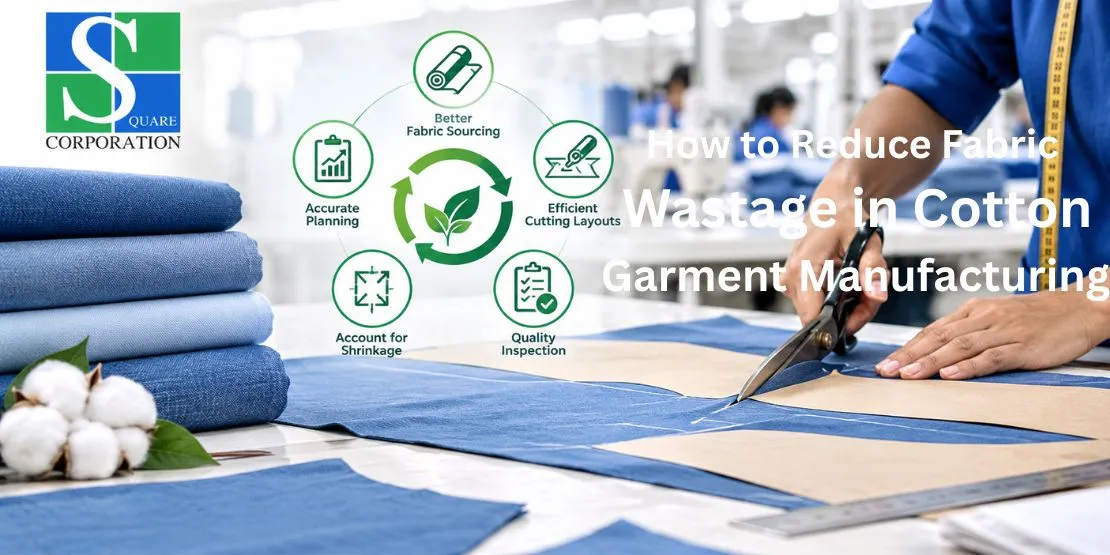
Cotton garment manufacturing is one of the most unique tasks where every meter of fabric matters. From the first roll arriving at the manufacturing unit to the final garment leaving the stitching line, every decision affects material consumption, production costs, and overall efficiency. However managing the fabric wastage is a major challenge for garment manufacturers.
An inefficient cutting layout, inaccurate measurements, and poor coordination between sourcing and production teams can turn valuable cotton fabric into avoidable waste. However, even with expensive machinery or a complete manufacturing process overhaul, you cannot eliminate fabric wastage. A trusted textile trading company in India can reduce fabric wastage by choosing the right fabric, improving planning, and paying attention to every detail that influences production.
Now let’s explore this blog to understand how to reduce fabric wastage in cotton garment manufacturing.
Process of Reducing Fabric Wastage in Garment Manufacturing
If you want to reduce fabric wastage in garment manufacturing, this section can help.
Choose the right cotton fabric for production
Choosing a reliable, quality fabric that suits the garment design, fit, and production requirements helps avoid manufacturing problems. An unsuitable fabric width may leave more unused space between garment patterns.
Unexpected shrinkage may affect the garment dimensions, while inconsistent fabric quality can lead to fabric rejection. Thus, before placing a fabric order, the textile manufacturer must evaluate fabric composition, thickness, width, and quality consistency.
Improve marker making and cutting layouts
Marker making is one of the most important stages in controlling fabric consumption. It supports arranging garment pattern pieces on the fabric to use material efficiently, align prints, and meet design specifications.
Across a high-volume production run, these gaps can add up to a considerable amount of unused fabric. Textile manufacturers can improve cutting efficiency by reviewing different pattern arrangements before cutting, and considering fabric grain, directional prints, and pattern.
Inspect cotton fabric before it reaches the cutting tables
Discovering a fabric defect after garment pieces can be expensive. Depending on the fabric defect and its location, the affected pieces can be replaced or rejected. That’s why pre-production inspection can help identify potential issues before they spread across an entire order.
Look for specific concerns such as holes, stains, and visible surface damage. Manufacturers should establish clear inspection procedures and record the defects.
Consider shrinkage before finalizing patterns
Cotton fabric can change dimensions during washing, steaming, dyeing, and other finishing processes. If manufacturers do not account for these changes during pattern development, garments may fail to meet their intended measurements. This results in rejected pieces, rework, and additional fabric consumption.
To reduce the risk, textile manufacturers should test the fabric samples under conditions that reflect the intended production process. A few practical steps can help test the shrinkage in both length and width. Base shrinkage allowance on actual results rather than assumptions.
Plan fabric consumption more accurately
Accurate fabric consumption planning gives manufacturers a clear picture of how much material is actually required. Understanding the consumption level can help identify fabric shortages and plan urgent additional purchases from trusted Supima cotton suppliers in India.
To improve production planning and reduce wastage, textile manufacturers should finalize garment specifications and size ratios before calculating requirements. Comparing the estimated consumption with actual usage after production is a vital consideration.
Conclusion
Choosing the right quantity of fabric for textile production is a vital consideration in manufacturing. However, by applying material specifications, quality expectations, and production requirements, you can protect your manufacturing business by reducing fabric wastage. At Square Corporation, you can discuss your sourcing requirements and bulk fabric needs to run your production efficiently.