

Low-Waste Textile Industry
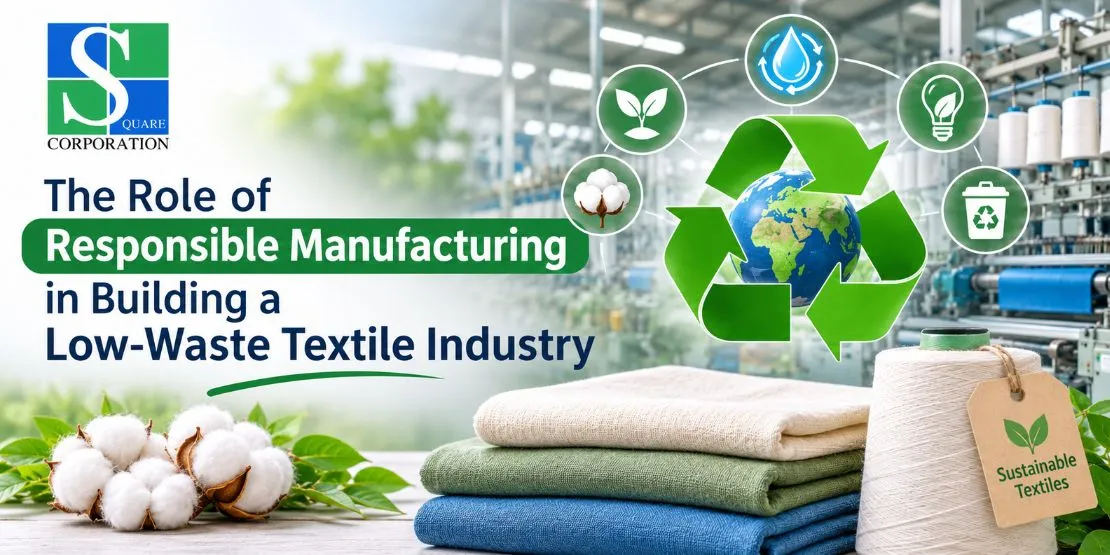
The Role of Responsible Manufacturing in Building a Low-Waste Textile Industry
15 November 2026 | By admin
Each yard of fabric produced in a textile factory has its own unique story, but in most cases, that story ends at a dumpsite. Environmental manufacturing arises when the creation of waste is regarded as a design challenge and can therefore be overcome through improved manufacturing techniques. Each step in the manufacturing process offers an opportunity for reduction of waste. Organic cotton manufacturers in India have shown that environmental manufacturing and commercial success can co-exist.
Responsible manufacturing spans the whole supply chain. Precise cutting will save on waste, but the scrap collection process will ensure that scraps get used to make recycled materials. Water and dye recovery systems minimize the need for chemicals, but energy-efficient machinery cuts down on emissions. Waste reduction is built into the design process. The overall process may be costly in planning and investment, but it leads to a more efficient textile industry.
Various Roles of Responsible Manufacturing in Building a Low-Waste Textile Industry
Proper manufacturing can be helpful in saving textiles and preserving natural resources. It can be helpful to ensure ethical manufacturing practices. The textile industry can make quality products through proper decisions.
Choose sustainable raw materials for textile production
Textile production requires the right choice of materials. The use of organic or recycled materials would help limit the impact of this industry on nature. Some examples of raw materials used are organic cotton, recycled polyester, linen, and hemp.
Work with responsible textile suppliers
A low-waste textile industry is not dependent on factories alone but also on those who provide the raw materials used. Manufacturers can benefit from working with responsible textile suppliers in India to get quality materials. Choose suppliers who provide full information about their products and follow safe manufacturing practices.
Use water-efficient methods
Water has an important part to play in the process of making textiles. Water is needed for washing, dyeing, printing, and finishing the fabric. Traditional methods may consume plenty of water, which may be difficult for local water sources. The right manufacturer may install water-efficient machinery and recycle water whenever possible.
Improve energy efficiency in textile factories
Energy is consumed in textile factories for machinery, heating, lighting, drying, and other processes involved in manufacturing. High energy consumption develops to high operational costs and pollution. Energy efficiency can be increased through the use of modern machinery, energy-efficient lighting such as LEDs, and efficient heating methods.
Reduce packaging waste
The third source of waste in textiles could be the packaging of goods. Often, the plastic film, excessive packaging, and other non-reusable items end up in garbage. Companies could use recyclable cardboard packaging or reusable packaging, as well as use less packaging that is required for particular products.
Train workers in responsible manufacturing practices
The employees also contribute significantly to the reduction of waste in textiles. The most sophisticated equipment will not help much if the people using it are not trained. They need to know how to manage the material, machine, waste, water, and energy.
Track waste and set clear sustainability goals
You cannot improve something if you do not know how to measure it. Textile producers should monitor the amount of cloth, water, energy, and packaging used in the production process. This data allows one to see where wastage is the greatest. For example, one company may waste a lot of fabric in the cutting process.
Conclusion
Responsible manufacturing is one key aspect that will help create a zero-waste fashion industry. Apart from using eco-friendly fabrics, responsible manufacturing involves reducing the amount of water used, conserving energy, recycling waste, producing quality products, and ensuring fair treatment for laborers. Each stakeholder in the whole chain of operation has a significant role to play in ensuring that the production process of textile products is sustainable.
 Previous Post